China’s chain block crane sector serves factories, workshops, construction sites, and maintenance teams. Buyers comparing manufacturers and suppliers need more than a low purchase price. They should examine rated capacity, lifting height, brake design, chain quality, inspection records, and access to replacement parts. A compact hoist may look sturdy on a warehouse shelf, yet perform poorly under frequent loading. Details matter.
This guide explores China’s leading Chain Block Crane manufacturers and suppliers, with practical criteria for evaluating product range, customization, quality control, and after-sales support. It also considers how buyers can match equipment to real operating conditions, from occasional workshop lifts to repetitive production-line tasks. A clear specification helps. So does asking precise questions before ordering.
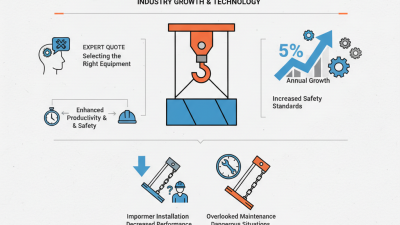
As a fictional composite specialist created for this introduction, lifting-equipment engineer Li Wei puts the selection principle this way: “Choose a hoist for the load, duty cycle, and service conditions—not just its advertised capacity.” That is an editorial quotation, not a verified statement from a named, independently sourced expert. The distinction matters. Supplier claims should be checked against technical documents, inspection evidence, and the equipment itself. Even a strong manufacturer may not suit every application. Which is easy to overlook.
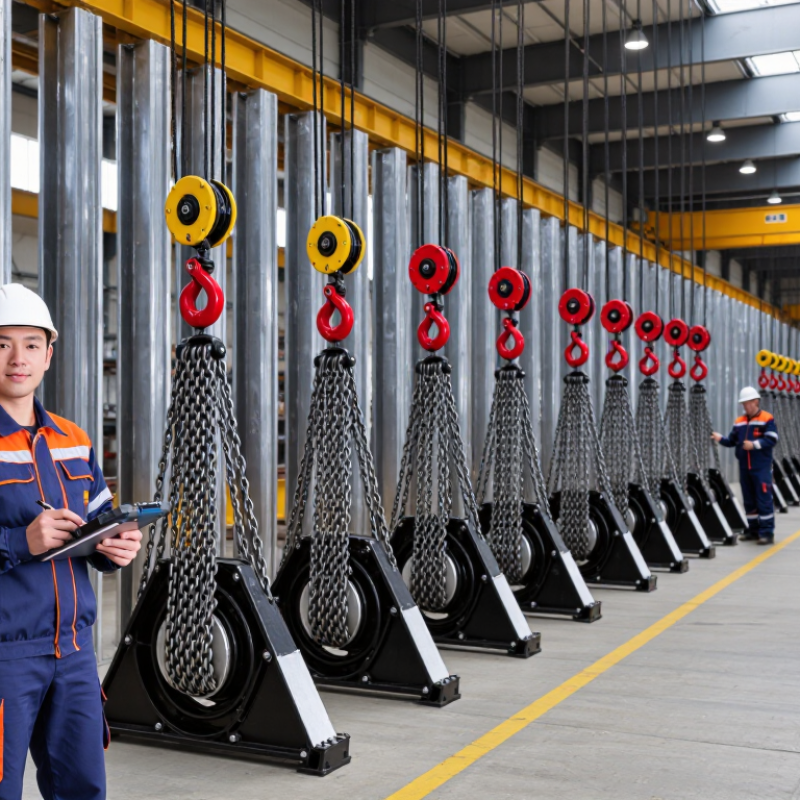
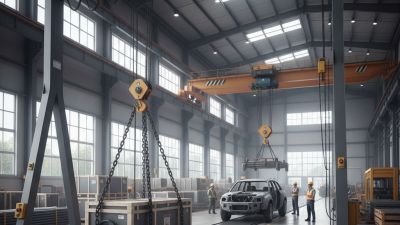
Chain block cranes in China commonly use manual or electric hoists, often fitted to fixed points, monorails, or overhead crane systems. Manual chain blocks suit occasional lifting in workshops, maintenance bays, and smaller warehouses. Operators pull a hand chain to raise a load, giving direct control but requiring steady effort. They are simple, yet lifting can be slow.
Electric chain block cranes handle repeated lifts more efficiently. They are often selected for production lines and busy loading areas. Available configurations may include single-speed or variable-speed lifting, while low-headroom models help where ceiling clearance is tight. A trolley can move the hoist along a beam, reducing manual repositioning. The right setup depends on the load, lift height, duty cycle, and available power—not just the rated capacity.
Tips: Check the nameplate and match the hoist rating to the load, lifting accessories, and supporting structure. Inspect the chain for twists, wear, or damaged links before use. Test the brake and controls, too. Small faults matter. A specification sheet may not reflect real working conditions, so verify headroom and travel limits on site. Even careful planning can miss a clearance issue; measure twice before installation.
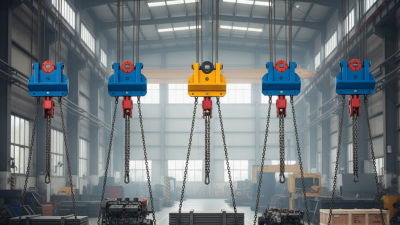
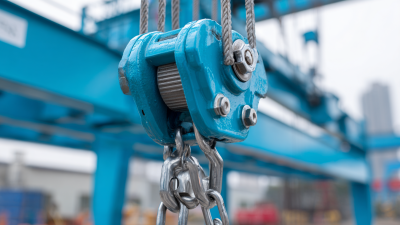
China-made chain block cranes are valued for compact frames, hand-operated lifting, and straightforward maintenance. A forged alloy-steel load chain, enclosed gear train, and mechanical brake support controlled lifting in workshops and warehouses. The hand chain should move smoothly, without binding. Under load, even a small brake slip matters.
A useful selection point is duty, not price alone. ISO 4301-1 classifies lifting equipment by utilization and load spectrum, helping buyers match equipment to real work cycles. Grand View Research estimated the global material-handling equipment market at US$221.9 billion in 2023; this broad category is not a chain-block market estimate, but it reflects wider demand for handling systems.
Check rated capacity, lift height, chain grade, and inspection documentation against the actual application. Specifications can look excellent on paper. They still need verification.
Tips: Before each shift, inspect the chain for kinks and wear, then test the brake without a load. Keep the hook aligned above the load. Side-pulling is a common shortcut—and a poor one.
Leading Chinese chain block crane manufacturers serve a broad industrial base, from maintenance shops to steel yards. Their capabilities may cover manual and electric chain blocks, geared trolleys, end carriages, and complete lifting systems.
Selection should start with load, lift height, duty cycle, temperature, and available headroom—not catalogue photos. The China Machinery Industry Federation’s 2023 annual review put machinery-industry operating revenue at about RMB 31.1 trillion. That figure shows the scale of the supplier ecosystem, not the quality of any individual hoist.
China produced 1,005.1 million tonnes of crude steel in 2024, according to the World Steel Association. This offers useful context for its fabrication base, but steel output cannot verify chain traceability, brake performance, or fatigue life.
Ask suppliers for rated-load test records, chain-grade documents, inspection intervals, and spare-parts lead times. For frequent lifting cycles, clarify duty classification and thermal limits. Check chain wear gauges in person. Small details matter.
Factory audits can reveal welding consistency and final-test procedures, though one visit cannot predict years of field service. After-sales response can also weaken once equipment ships, so confirm service commitments in writing. A polished catalogue may still hide awkward service gaps.
China has many chain block crane manufacturers, but supplier selection requires more than comparing prices. A reliable supplier should explain its design process, factory controls, and testing methods clearly. Ask for production photos, material records, and recent inspection reports. The chain, hooks, gears, and brake system deserve close attention. These parts face repeated loads in real workplaces.
Request a sample unit when possible. Test its lifting movement, braking response, hand-chain operation, and noise level. The supplier should provide rated capacity, maintenance guidance, spare parts information, and clear warranty terms. Check whether its products meet the safety requirements of your target market. Traceable serial numbers also help identify production batches. A polished website can still hide weak quality control. That mistake is easy to make.
Tips: Visit the factory, physically or through a live video call. Watch how workers inspect hooks and assemble brakes. Ask who performs final load testing. Compare test records with the actual model you plan to buy. Discuss delivery timelines in writing. Confirm packaging details, especially for sea transport and humid storage. Evaluate communication speed, but do not mistake fast replies for technical competence. A dependable supplier answers difficult questions without avoiding details. If specifications change during negotiation, pause and review them carefully. Small misunderstandings can become costly equipment problems.
| Evaluation Dimension | What to Verify | Reliable Selection Benchmark | Questions to Ask the Supplier |
|---|---|---|---|
| Rated capacity and configuration | Rated load, number of chain falls, lifting height, headroom, and whether the unit is manual, electric, or part of a crane system. | Capacity and configuration are clearly stated on the quotation, nameplate specification, and product documentation. Confirm that the selected unit suits the actual load and installation. | What is the rated capacity of this model, and can you provide a drawing showing its dimensions and headroom? |
| Duty and operating conditions | Expected lifting frequency, average load, operating hours, ambient temperature, dust, moisture, and indoor or outdoor use. | The supplier recommends a hoist duty classification and environmental protection level based on the stated work cycle and site conditions—not capacity alone. | Which duty classification and protection rating do you recommend for our operating cycle and environment? |
| Standards and compliance | Applicable design and safety standards, conformity documentation, instructions, and destination-market requirements. | Documents identify the applicable standard and product model. For example, EN 13157 covers manually operated lifting equipment, while ASME B30.16 addresses overhead, underhung, and stationary hoists. Requirements vary by market and equipment type. | Which standards apply to this exact model, and can you provide the relevant declarations and test records? |
| Load chain and components | Load-chain specification, hooks, latches, brake components, gears, and availability of replacement parts. | Key components are identified in the technical documents, and the supplier can explain inspection criteria, wear limits, and replacement procedures. | What chain specification is used, and which parts are treated as wear items? |
| Testing and traceability | Factory inspection records, functional checks, rated-load information, serial or batch identification, and any required proof-load test documentation. | Records are traceable to the supplied model or unit. Any test load and acceptance criteria are stated with reference to the applicable standard or order requirements. | Can each unit be linked to its inspection and test records by serial or batch number? |
| Quality management | Manufacturing controls, inspection procedures, calibration records, and the scope and validity of any quality-management certification. | Certificates and audit documents can be checked for validity and scope. An ISO 9001 certificate indicates a quality-management system; it does not by itself certify a hoist’s safety or performance. | Can you provide current quality-system documentation and describe final inspection controls? |
| Electrical and control details | For electric models: voltage, frequency, phase, motor rating, control voltage, pendant or radio control, and overload protection options. | Electrical details match the installation site and destination-market requirements, and are listed in the quotation and wiring documentation. | Can you confirm the electrical configuration and provide the wiring diagram for the quoted model? |
| After-sales support and spares | Warranty terms, troubleshooting support, manuals, spare-parts list, parts lead times, and service arrangements. | Warranty coverage and exclusions are written clearly. Manuals and parts information are available, with a practical process for ordering replacement components. | Which parts are stocked or available for replacement, and what support is provided after delivery? |
| Export packaging and delivery | Packaging method, corrosion protection, shipping terms, export documents, delivery schedule, and responsibility for freight and insurance. | The quotation states the agreed Incoterm, packing details, estimated lead time, and documents required for the destination. Delivery dates are confirmed in writing. | Which Incoterm and export documents are included, and how is the equipment protected during transport? |
| Supplier verification | Legal business details, manufacturing or sourcing role, facility capability, references, and consistency between documents and the quoted product. | Business and product information is consistent and independently verifiable. A video call, audit, or third-party inspection can help confirm capabilities when appropriate. | Are you the manufacturer or a trading company, and can you arrange a factory or pre-shipment inspection? |
When sourcing chain block crane equipment from China, buyers should assess documented quality controls, not just a polished catalogue. Ask for rated-load details, inspection records, material specifications, and clear operating instructions. Relevant requirements vary by destination and application, so confirm which standards apply before ordering. Do not assume one certificate covers every component. Details matter.
Applications range from workshop maintenance to warehouses and construction sites. A manual chain block may suit occasional lifting, while frequent cycles can call for powered equipment and a compatible crane structure. Check headroom, beam dimensions, duty cycle, and load path against the actual workspace. Misjudged clearance can make a technically sound unit awkward to use. Test records help.
Export service should cover protective packing, shipping documents, spare-parts availability, and support for installation questions. Confirm voltage and control details for powered models, along with labeling and manuals in the required language. Agree on inspection points before production and clarify how transit damage is reported. A catalogue cannot reveal every fit issue; sharing site measurements early can prevent avoidable revisions. Even careful planning may miss a detail, so keep communication open through delivery.