Inquiry
Form loading...

How to Choose a Movable Hydraulic Lift in 2026?

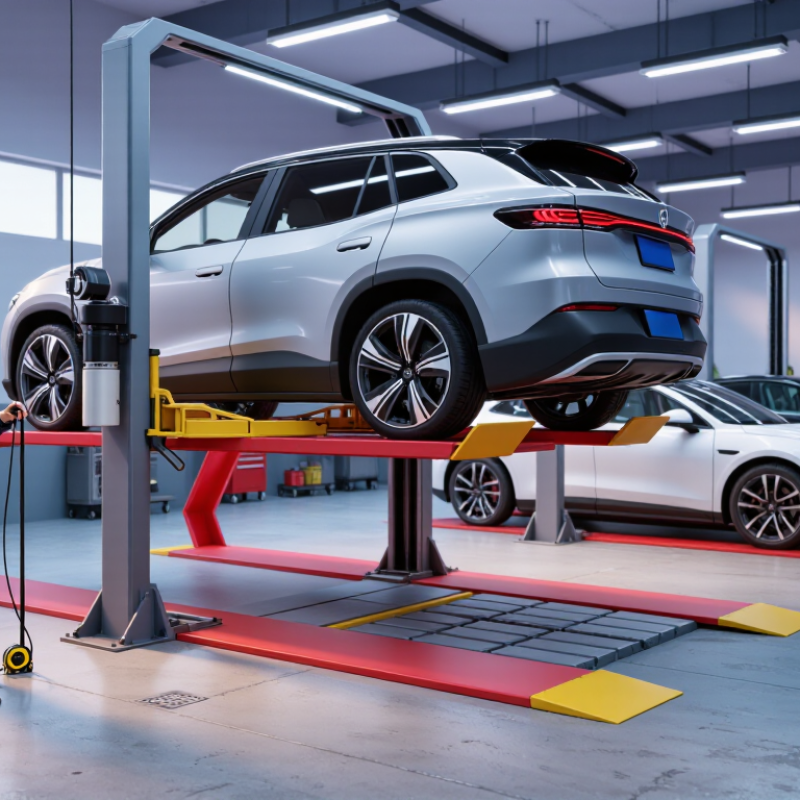
Choosing a Movable Hydraulic Lift in 2026 requires more than comparing maximum capacity and purchase price. Workshops now face heavier electric vehicles, tighter service bays, and changing repair routines. The International Energy Agency’s Global EV Outlook 2025 reported more than 17 million electric cars sold worldwide in 2024. That shift matters because battery packs can add substantial vehicle weight beneath the floor. A lift must support the vehicle safely, while leaving useful access around its underside.

Real workshop experience should guide the specification. Measure the heaviest vehicle, wheelbase, tire width, and available ceiling height before reviewing brochures. Check the rated capacity, lifting range, hydraulic hose protection, mechanical locking system, and emergency-lowering method. A compact unit may move easily between bays, but small wheels can struggle across cracked concrete. It happens. Consider floor loading too, especially when the lift and vehicle create concentrated pressure near columns or drains.

Professional guidance remains essential. The Automotive Lift Institute promotes third-party certification and regular inspection practices for vehicle lifts. OSHA guidance on vehicle servicing equipment also highlights stable support, proper maintenance, and safe operating procedures. These references do not replace local requirements or manufacturer instructions. They provide a dependable starting point. Reports from IEA and the U.S. Department of Energy also show why technicians need equipment suited to both conventional and electric vehicles. The cheapest option can look persuasive. Yet a slightly higher investment may provide better reach, controls, and service life. No checklist is perfect, but a documented comparison reduces avoidable mistakes. This guide explains how to evaluate capacity, mobility, safety features, maintenance needs, and total ownership cost before choosing a lift for real workshop conditions.
How to Choose a Movable Hydraulic Lift in 2026?

Movable Hydraulic Lift Basics and Main Types

A movable hydraulic lift uses a pump, reservoir, cylinder, relief valve, and mechanical locks. Hydraulic pressure raises the platform or lifting arms. Mechanical locks should carry the load during service. Hydraulic pressure alone is not enough.

The main types serve different workspaces. A mobile scissor lift has a short footprint and broad platform. It suits tire, brake, and underbody work. A mobile column lift uses separate wheeled columns. It offers greater clearance for trucks and commercial vehicles. A portable low-profile lift fits smaller garages, but its working height is limited.

I once treated rated capacity as the deciding number. That was a mistake. Load center, floor strength, minimum height, and lock position matter just as much.

The International Energy Agency’s Global EV Outlook 2025 reports over 17 million electric cars sold worldwide in 2024. That growth makes battery clearance and distributed lifting points more important. Choose a lift with suitable adapters and visible access around the battery case. The U.S. Bureau of Labor Statistics recorded 5,283 fatal workplace injuries in 2023. Not all involved lifting equipment, yet the figure reinforces disciplined inspections and operator training. Check hoses, pins, wheels, welds, and emergency lowering controls before every shift. Uneven floors remain a common weakness. A lift may look stable while carrying an off-center vehicle. ANSI and ASME guidance should support the selection, but the equipment manual and site assessment still deserve careful attention.
Define the Required Load Capacity and Lifting Height

How to Choose a Movable Hydraulic Lift in 2026?

Define the Required Load Capacity and Lifting Height

Start with the heaviest real load, not the average load. Include tools, pallets, fixtures, and uneven weight distribution. A 600 kg machine may become a 720 kg working load after accessories and handling movement. A 20% planning margin is practical, but it is not a universal safety rule. Confirm the manufacturer’s rated capacity at the intended lift position. Do not guess.

The load’s center of gravity matters as much as its weight. A long motor can overload the front edge, even below the stated capacity. Check the load chart, platform dimensions, wheel loading, and floor condition. On busy sites, operators often focus on maximum height and overlook stability during movement. That mistake deserves attention. The U.S. Bureau of Labor Statistics recorded 2,607,900 nonfatal private-industry injuries and illnesses in 2023, showing why handling decisions need documented controls.

Define both the lowest entry height and the highest working height. Measure the machine, doorway, ceiling, and technician’s reach. EU-OSHA’s ESENER findings reported that 54% of European workplaces identified lifting or moving people or heavy loads as a risk factor. A suitable lift should reduce awkward handling, not create a higher overhead hazard. Verify hydraulic hose routing, emergency lowering, and rated capacity throughout the travel range. A lift that reaches the target height but cannot safely move the load is poorly specified.

Compare Power Systems, Mobility, and Workplace Compatibility

How to Choose a Movable Hydraulic Lift in 2026?

A movable hydraulic lift should match your power supply, floor plan, and daily workload. Electric systems suit indoor workshops with stable power and lower noise requirements. Battery-powered lifts improve flexibility, especially where cables create trip hazards. However, batteries add charging time, weight, and maintenance needs. Diesel or petrol systems can support outdoor work, but fumes and noise may reduce workplace compatibility.

Mobility depends on more than wheel size. Check turning clearance, ramp angles, locking mechanisms, and the surface condition. A compact lift may move easily on smooth concrete but struggle across cracked floors. Confirm the rated load, lifting height, platform width, and emergency lowering method. These details matter when technicians work beside walls, vehicles, or storage racks. A perfect lift does not exist. I have seen buyers prioritize maximum capacity, then regret losing valuable aisle space.

Tips: Measure the narrowest doorway first. Test movement with the intended load. Compare charging access, ventilation, and noise limits. Ask for maintenance intervals and hydraulic hose inspection guidance. Keep a small safety margin below the rated capacity. It is tempting to choose the strongest model, but excessive size can restrict movement and complicate installation. Review the operator’s manual before purchase, and let actual workflow—not attractive specifications—make the final decision.

How to Choose a Movable Hydraulic Lift in 2026? - Compare Power Systems, Mobility, and Workplace Compatibility

Lift Type Typical Rated Capacity Typical Lifting Height Power System Mobility Method Typical Travel or Operating Surface Best Workplace Compatibility Main Advantages Main Limitations Key Selection Checks
Manual Hydraulic Lift Table 150–500 kg 0.8–1.5 m Hand-operated hydraulic pump; no electrical supply required Push by hand on swivel casters; normally moved when unloaded Flat, smooth indoor floors; short-distance movement Warehouses Packing areas Maintenance rooms Low purchase and maintenance cost; simple controls; suitable where electrical power is unavailable Higher operator effort; slow lifting cycle; limited capacity and height compared with powered models Check pump effort, wheel size, parking brakes, platform dimensions, overload protection, and floor flatness
Battery-Powered Electro-Hydraulic Lift Table 300–1,000 kg 0.8–1.5 m 12 V or 24 V rechargeable battery driving a hydraulic pump Manual pushing; some configurations include powered travel Indoor floors and short to medium travel routes Production lines Material handling Loading areas Reduces manual pumping; quiet operation; no trailing power cable during use Requires charging, battery maintenance, and planned operating cycles Compare battery voltage, charging time, duty cycle, battery replacement cost, wheel clearance, and emergency lowering
AC Electro-Hydraulic Mobile Lift Table 500–2,000 kg 1.0–2.0 m Electric motor and hydraulic pump supplied by 110–120 V or 220–240 V AC Manual movement; normally positioned before lifting Indoor areas with a suitable electrical outlet and smooth flooring Fixed workstations Assembly areas Workshops Consistent lifting performance; suitable for frequent cycles; no battery charging downtime Needs a power connection; cable management can restrict movement; not ideal for wet or remote areas unless appropriately rated Confirm voltage, plug type, cable length, duty cycle, grounding, IP rating, and outlet capacity
Self-Propelled Battery Hydraulic Scissor Lift 300–1,000 kg for compact models; higher capacities are available in larger units Approximately 3–12 m platform height, depending on design Rechargeable battery for hydraulic lifting and electric travel motors Powered drive with steering; usually fitted with non-marking tires Firm, level indoor or outdoor surfaces within the manufacturer’s grade limits Facility maintenance Installation work Construction interiors Combines vertical access with onboard mobility; eliminates frequent repositioning by hand Higher cost and weight; requires guardrails, surface assessment, and operator training Check platform height, working height, platform capacity, gradeability, turning radius, stabilizers, emergency descent, and wind limits
Mobile Hydraulic Vehicle Column Lift Typically 4–32 tonnes per complete set, depending on the number of columns and configuration Approximately 1.5–2.0 m under-wheel or chassis clearance Battery-powered electro-hydraulic system; some models use wired control units Columns are rolled into position individually or as a coordinated set Hard, level workshop floors with adequate load-bearing capacity Vehicle workshops Fleet maintenance Bus and truck service High capacity; flexible bay arrangement; useful where permanent lift installation is impractical Requires correct load distribution, synchronized operation, and substantial clear floor space Verify axle and tire loading, column synchronization, locking system, floor capacity, lifting points, and minimum ceiling height
Pneumatic-over-Hydraulic Mobile Lift Approximately 1–20 tonnes, depending on cylinder arrangement and application Commonly 0.5–1.5 m for workshop and service equipment Compressed air, commonly around 6–8 bar, powering a hydraulic intensifier Manual positioning on wheels or casters; usually moved without a load Industrial floors with a reliable compressed-air supply Vehicle service Industrial maintenance Areas limiting electric motors No onboard electrical motor; fast lifting response in suitable service environments Requires an air compressor, produces operating noise, and depends on air pressure and hose condition Check air quality, pressure, hose rating, noise exposure, lifting-point geometry, and area-specific safety certification requirements
Mobile Hydraulic Dock or Platform Lift 500–2,000 kg Approximately 0.6–1.5 m Manual, battery-powered, or AC electro-hydraulic options Heavy-duty casters, towable chassis, or guided positioning wheels Loading docks, ramps, and warehouse floors subject to model-specific slope limits Distribution centers Freight handling Dock operations Bridges moderate level differences; can support pallet and equipment transfer tasks Ramp gradients, edge gaps, and weather exposure can affect stability and safe use Confirm platform size, dock height range, ramp angle, edge protection, wheel locks, load center, and weather rating
Low-Profile Mobile Hydraulic Machine Lift 1,000–5,000 kg Approximately 0.3–1.0 m Manual hydraulic pump or battery-powered hydraulic pump Casters, rollers, or a towable base; normally positioned before raising Level industrial floors with sufficient clearance beneath the load Machine installation Tooling changeover Heavy equipment service Fits beneath low-clearance machinery; useful for positioning heavy loads at working height Limited lifting height; concentrated loads may require floor protection or load-spreading plates Check minimum lowered height, load center, wheel or roller rating, machine contact points, lateral stability, and floor loading
Selection note: The figures above are typical industry ranges for generic movable hydraulic lift categories, not guaranteed specifications for every model. Always verify the manufacturer’s rated capacity, load center, lifting height, floor requirements, guarding, emergency lowering system, inspection schedule, and applicable local safety standards before purchase or operation.

Evaluate Safety Features, Stability, and Maintenance Needs

How to Choose a Movable Hydraulic Lift in 2026?

When assessing a movable hydraulic lift, safety features deserve more attention than lifting speed. Check the rated capacity against your heaviest vehicle, tools, and attachments. Never rely on a “maximum” figure without a safety margin. Look for mechanical locking positions, emergency lowering controls, hose protection, and clearly marked operating instructions. Guards around pinch points also matter. During inspections, I prefer controls that stop movement immediately when released. Small delays can become serious problems.

Stability depends on more than wide wheels. Examine the base frame, wheel locks, floor contact, and maximum lifting height. The lift should remain steady on a clean, level surface, even when the load shifts slightly. Uneven concrete is a warning sign. Measure your workspace before purchase. A lift that fits tightly between walls may restrict evacuation and routine servicing. I once underestimated door clearance, which made positioning awkward. That mistake was preventable.

Maintenance needs should be practical, not theoretical. Ask how often hydraulic oil, seals, pins, and hoses require inspection. Look for accessible grease points and replaceable wear parts. Keep a written record of load tests, leaks, unusual noises, and repairs. A qualified technician should examine safety locks and hydraulic pressure at scheduled intervals. Dust around a cylinder can hide a slow leak. Cleaning alone may not reveal it. Some operators inspect too quickly, especially after busy shifts. That habit needs correction. Choose a lift with readable gauges, durable labels, and service instructions that technicians can actually follow.

Select the Best Lift Through Cost and Application Analysis

How to Choose a Movable Hydraulic Lift in 2026?

Select the lift by application before comparing prices. A 1,000-kilogram capacity means little if the platform moves across uneven concrete. Record the load, lifting height, duty cycle, aisle width, floor condition, and power supply. For workshops, compact wheels and precise lowering may matter more than maximum height. Outdoor users should check weather protection, braking performance, and battery endurance.

Safety remains non-negotiable. The U.S. Bureau of Labor Statistics reported 885 fatal work injuries from falls, slips, and trips in 2023. IPAF’s Global Safety Report 2024 also recorded 118 fatalities involving mobile elevating work platforms during 2023.

These figures justify guardrails, emergency lowering, overload protection, and documented inspections.

Compare total cost, not only the purchase quotation. Include delivery, operator training, scheduled servicing, hydraulic oil, battery replacement, inspections, and downtime. A cheaper lift can become expensive when seals fail during peak production. Ask for service intervals and replacement-part availability in writing. Calculate cost per operating hour over five years.

My first estimate is often too optimistic. Utilization changes everything. A lift used twice weekly may favor a lower purchase cost, while daily use requires stronger components and easier maintenance. Consider a trial with the actual load and route. Watch for slow lowering, wheel drag, unstable steering, or awkward controls. These small details often reveal costs that spreadsheets miss.

Sources: U.S. Bureau of Labor Statistics, Census of Fatal Occupational Injuries, 2023; IPAF, Global Safety Report, 2024.