How to Choose the Right Hydraulic Hoist for Your Lifting Needs?
Choosing the right hydraulic hoist is crucial for various lifting tasks. Hydraulic hoists have gained popularity in many industries for their efficiency and reliability. They can lift heavy loads with precision, making them essential in construction, warehouses, and repair shops.
When selecting a hydraulic hoist, consider the weight capacity. Not all hoists are designed for the same load. You must also think about the lifting height. Each job may require different specifications. Features such as portability and power source play a significant role too. Sometimes, the perfect choice isn’t clear.
Mistakes can happen if you rush. Overloading a hoist can lead to accidents. Think about your specific needs. Assess the environment where you will use it. The hydraulic hoist you choose should match those conditions seamlessly. A careful selection process ensures safety and efficiency in your lifting tasks.
Understanding Different Types of Hydraulic Hoists Available on the Market
When selecting a hydraulic hoist, understanding the various types available is crucial. There are several designs tailored for specific lifting tasks. A common option is the hydraulic floor hoist. This model is great for lifting heavy loads vertically with a sturdy base. It’s widely used in automotive applications, but be aware of its weight limitations. Consider the dimensions of the items you lift. Overloading can lead to accidents.
Another type is the portable hydraulic hoist. These are useful for smaller jobs or in tight spaces. They can be moved easily from one site to another. However, their lifting capacity may not match that of larger hoists. It's important to assess the hoist's safety features. Some models lack sufficient fail-safes, which warrants further review.
Lastly, there are overhead hydraulic hoists. Designed for overhead lifting, they can save floor space. Yet, installation can be complex and requires careful planning. Clear access to power sources and safety checks should be priorities. When choosing, reflect on your specific needs and the working environment. Each type has its strengths and challenges, so choose wisely.
How to Choose the Right Hydraulic Hoist for Your Lifting Needs?
| Type of Hydraulic Hoist |
Load Capacity (Tons) |
Lifting Height (Meters) |
Weight (Kilograms) |
Applications |
| Manual Hydraulic Hoist |
2 |
3 |
30 |
Construction, Automotive Repair |
| Electric Hydraulic Hoist |
5 |
10 |
85 |
Industrial Lifting, Warehousing |
| Pneumatic Hydraulic Hoist |
3 |
6 |
40 |
Marine Applications, Construction |
| Portable Hydraulic Hoist |
1 |
2.5 |
20 |
Home Use, Light Duty Tasks |
Assessing Load Capacities and Lifting Requirements for Your Application
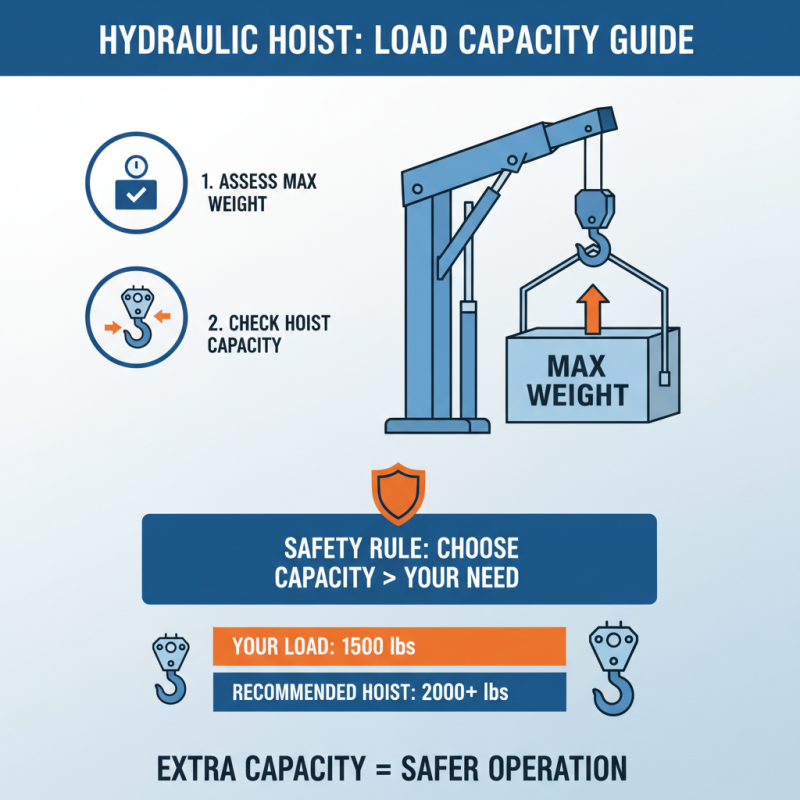
When selecting a hydraulic hoist, understanding load capacities is crucial. Assess the maximum weight you plan to lift. Each hoist has a specific capacity. Choose one that exceeds your requirements. A little extra capacity adds safety. For instance, if you expect to lift 1,500 pounds, consider a hoist rated for 2,000 pounds.
Next, analyze the lifting height needed for your application. Different projects require different heights. The hoist must reach the desired elevation without strain. If you miscalculate, it could lead to problems. Imagine a hoist that barely reaches the required height. It introduces unnecessary challenges. Additionally, look at the duty cycle. Frequent lifting needs a hoist designed for continuous use.
Lastly, consider the environment where you'll use the hoist. Extreme temperatures, dust, or moisture can affect performance. Research hoist features that can withstand these conditions. Ensure your choice aligns not only with current needs but also anticipated future challenges. The right decision today saves time and effort tomorrow.
Evaluating Safety Features and Compliance Standards in Hydraulic Hoists
When selecting a hydraulic hoist, safety features should be a primary concern. Look for hoists with overload protection. This feature prevents lifting beyond the rated capacity. It's also essential to check the emergency stop function. In critical situations, a quick halt can prevent accidents. Many hoists include safety locks to hold loads securely when stationary.
Compliance with industry standards is crucial for safe operation. Check if the hoist meets relevant local and international safety regulations. This ensures reliability and performance in various environments. Documentation showing compliance can give you peace of mind. Identify whether the hoist has undergone rigorous testing. Testing proves its durability and safety for repetitive use.
Be aware that not all hoists are created equal. Some may lack essential safety features or compliance documentation. This can lead to hidden risks during lifting tasks. It's worth investing time to evaluate each hoist carefully. Make sure to reflect on your specific lifting needs. Choose a hoist that balances your requirements with safety and compliance. This may involve making tough decisions. Safety should never be an afterthought in your selection process.
Comparing Manual vs. Electric Hydraulic Hoists for Efficiency and Ease of Use
When it comes to choosing a hydraulic hoist, the decision between manual and electric options can be daunting. Manual hydraulic hoists often require physical effort, which can lead to fatigue. They are usually less expensive and simpler to maintain. However, they demand more time and attention during operation. If you're lifting heavy loads repeatedly, this might not be the best choice.
On the other hand, electric hydraulic hoists bring convenience and speed. With just the push of a button, you can lift heavy items efficiently. They reduce physical strain significantly, making them ideal for frequent lifting tasks. However, electric hoists come with a higher upfront cost. They also require access to electricity, which might not always be available in every setting.
Consider your specific needs carefully. If you prioritize efficiency and ease, an electric hoist may serve you well. But if your operations are sporadic and your budget is tight, a manual hoist could be a viable option. Reflecting on the frequency of your lifting tasks can guide your decision, ensuring you choose the right hoist for your situation.