
Inquiry
Form loading...
Choosing the best Electric Chain hoist is not simply a matter of comparing prices or lifting capacities. The correct model must match the load, lifting height, working speed, duty cycle, and available power supply. A hoist rated for 2 tons may perform poorly if it operates continuously in a dusty workshop or under frequent shock loading. Real working conditions matter.
During equipment selection, inspect the rated load, chain size, brake performance, pendant controls, limit switches, and emergency stopping function. Check whether the hoist supports single-phase or three-phase power. Measure the lifting distance carefully. A chain bag that is too small can create unnecessary handling problems. Small details often decide whether daily operation feels controlled or frustrating.
Safety comes before convenience. Always review the manufacturer’s technical data, inspection guidance, and service recommendations. Choose suppliers that provide traceable certifications, clear warranty terms, and accessible replacement parts. An experienced technician should verify the installation and test the hoist before regular use. Do not rely on appearance alone. A quiet motor is not proof of quality, and a low price may conceal weak components or limited support.
There is no perfect hoist.
The best choice depends on the workplace, load pattern, and maintenance discipline. This guide compares the key specifications and practical factors that influence reliability. It also highlights common selection mistakes, because even careful buyers can overlook power compatibility or headroom requirements. A thoughtful evaluation now can prevent unstable lifting, costly downtime, and unsafe improvisation later.
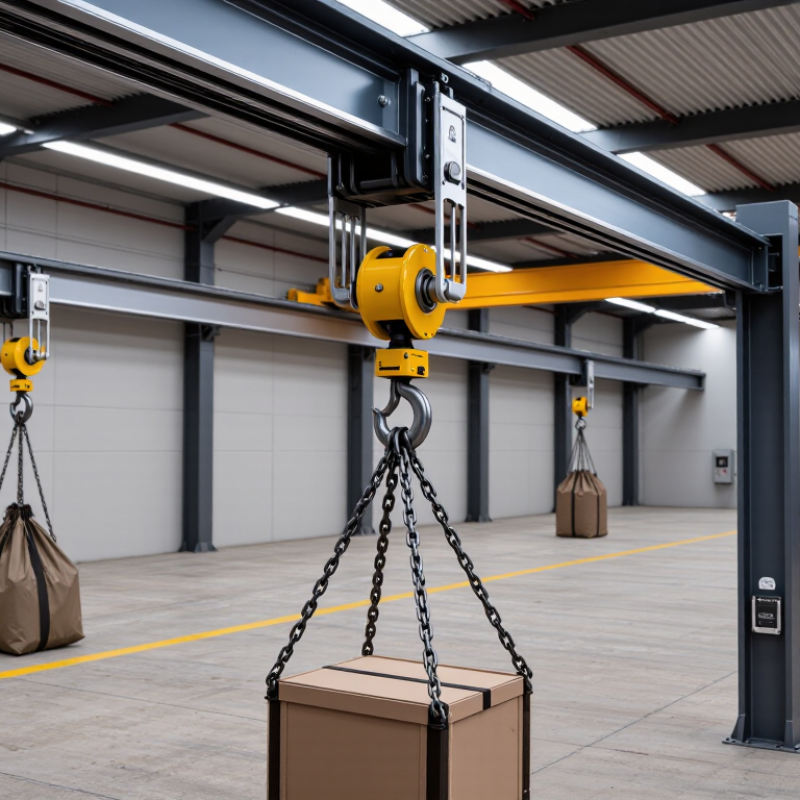
How to Choose the Best Electric Chain Hoist?
Define the Lifting Requirements and Work Environment
Start with the load, not the hoist. Record the maximum weight, lifting height, travel distance, and daily cycles. Include the load’s shape and center of gravity. A 1,000-kilogram machine may need more capacity than its label suggests. Sudden starts, angled pulls, and frequent positioning increase mechanical stress.
Check the real workplace. Is the area dusty, damp, hot, cold, or exposed to chemicals? Measure available headroom and confirm the power supply before comparing lifting speed. For repetitive production, select a suitable duty classification instead of choosing only by rated capacity. ASME B30.16 emphasizes proper inspection, operation, and maintenance of underhung hoists. Small details matter. A short lifting height can still require a longer chain bag or special controls.
Safety data supports this caution. The International Labour Organization estimated 2.93 million work-related deaths and 395 million nonfatal injuries globally in 2019. These figures cover all industries, not hoists alone, but they show why workplace conditions cannot be treated as secondary. The U.S. Bureau of Labor Statistics recorded 5,283 fatal work injuries in 2023. A common selection mistake is trusting catalog figures without observing the actual workflow. Walk the lifting route. Watch how operators position loads. Recheck the decision after installation, because the first specification is sometimes incomplete.
| Selection Dimension | What to Define | Typical Engineering Data | Recommended Selection Guidance | Example Requirement |
|---|---|---|---|---|
| Rated Load Capacity | Determine the heaviest load to be lifted, including lifting attachments and below-the-hook devices. | Common electric chain hoist capacities range from approximately 0.125 t to 10 t. Larger capacities may require specialized equipment. | Choose a rated capacity equal to or greater than the maximum total lifted load. Do not use rated capacity as a reason to exceed the working load limit. | Maximum load: 1,600 kg including a spreader beam. Select at least a 2,000 kg rated hoist. |
| Load Margin | Account for uncertain load weights, impact from handling, and future operating needs. | A practical planning margin is often 10% to 25% above the calculated maximum lifted load, subject to applicable regulations and engineering review. | Avoid selecting a hoist that operates continuously at its maximum rating. The final capacity must remain within the hoist, trolley, beam, and accessory ratings. | Known load: 2,000 kg; planning margin: 20%; preliminary capacity: 2,400 kg. |
| Lift Height | Measure the required vertical travel from the lowest hook position to the highest hook position. | Standard chain lengths are often supplied in several-meter increments, while custom lengths may be available for taller structures. | Specify usable lift height rather than total building height. Check headroom, chain container capacity, and whether the load can reach every required position. | Required hook travel: 6 m; specify a chain length that provides at least 6 m of usable lift. |
| Lifting Speed | Define how quickly the load must be raised and lowered and whether precise positioning is important. | Typical lifting speeds are approximately 1 to 8 m/min. Variable-speed models can provide slower positioning and faster travel when appropriate. | Use a lower speed for delicate or precision positioning. Use a higher speed only when productivity requirements, load stability, and duty rating allow it. | Assembly positioning: select approximately 2 to 4 m/min or variable-speed control. |
| Duty Cycle and Work Class | Estimate operating hours per day, lifting cycles per hour, average load, and the percentage of time spent lifting. | Light workshop use may involve occasional lifting, while production service may require repeated cycles throughout a shift. Duty classifications differ by standard and manufacturer. | Select the duty class according to the actual load spectrum and operating frequency, not only the maximum load. Review the applicable standard, such as ASME, EN, or equivalent local requirements. | Two shifts with repeated lifting: choose a hoist designed for a medium or heavy industrial duty cycle after load-spectrum review. |
| Horizontal Travel | Determine whether the hoist will be stationary or mounted on a manual or powered trolley. | Travel speed may range from slow positioning speeds to approximately 20 m/min, depending on the trolley design and application. | Use a stationary hoist for one lifting point. Use a trolley when the load must move along a beam. Confirm beam flange width, beam capacity, headroom, and end-stop requirements. | Required movement along a 12 m beam: specify a compatible powered trolley and verified beam system. |
| Headroom and Installation Space | Measure the distance from the supporting structure to the lowest practical hook position and identify overhead obstructions. | Low-headroom configurations reduce the vertical space occupied by the hoist and trolley, but the available reduction depends on the design. | Compare the required lift height with the available headroom. Check hook approach, chain bag clearance, maintenance access, and the position of electrical controls. | Limited clearance below a roof beam: specify a low-headroom arrangement after confirming the minimum hook approach dimension. |
| Power Supply | Confirm voltage, frequency, number of phases, control voltage, and available electrical capacity. | Industrial hoists commonly use three-phase power, while smaller units may use single-phase power. Common supply frequencies include 50 Hz and 60 Hz. | Match the hoist motor and controls to the site supply. Include overload protection, disconnecting means, grounding, and voltage-drop checks. | Available supply: 400 V, 50 Hz, three-phase; select compatible motor and control equipment. |
| Indoor or Outdoor Use | Identify whether the hoist will operate inside a building, under a roof, or fully exposed to weather. | Outdoor service may involve rain, ultraviolet radiation, condensation, wind, dust, and temperature changes. | Use suitable enclosures, corrosion-resistant finishes, weather protection, and drainage provisions. Outdoor installations also require protection of controls and electrical connections. | Covered outdoor loading area: select weather-resistant electrical components and protect the hoist from direct water exposure where required. |
| Dust, Moisture, and Corrosive Atmosphere | Assess water exposure, dust concentration, salt spray, chemicals, and cleaning methods. | Ingress-protection requirements depend on the installation. An IP rating describes enclosure protection against solids and water; it does not by itself define chemical resistance. | Specify the required IP level with the equipment supplier and verify compatibility with washdown procedures, humidity, salt, acids, alkalis, or combustible dust. | Food-processing washdown zone: require corrosion-resistant components and an enclosure rating suitable for the documented cleaning conditions. |
| Temperature and Altitude | Record the lowest and highest ambient temperatures and the installation elevation. | Motor performance, lubrication, brake operation, and electrical insulation can be affected by extreme temperature or high altitude. | Confirm the permissible ambient temperature range and apply any altitude derating or special lubrication requirements stated by the manufacturer. | Outdoor site at 2,500 m elevation: request confirmation of motor and brake suitability before purchase. |
| Hazardous Area Classification | Determine whether flammable gases, vapors, combustible dust, or fibers may be present. | Standard hoists are not automatically suitable for hazardous locations. Equipment certification must match the area classification and gas or dust group. | Use only equipment with the required hazardous-area certification and installation method. Do not rely on a general IP rating as a substitute for hazardous-area approval. | Paint-room application: obtain the site classification and select certified equipment for the specified hazardous zone. |
| Load Characteristics | Identify whether the load is rigid, flexible, fragile, unbalanced, hot, sharp-edged, or likely to swing. | Load behavior affects sling selection, shock loading, positioning accuracy, and operator safety. | Use appropriate lifting accessories, tag lines, guide systems, and controlled acceleration. Never use the hoist to drag loads sideways or pull loads from the floor. | Unbalanced machine frame: use a rated lifting beam or adjustable rigging designed for the load center of gravity. |
| Control Method | Choose pendant, radio remote, or integrated control based on visibility, distance, and operating conditions. | Pendant controls provide direct wired operation; radio controls allow greater mobility but require battery management and communication reliability. | Position the operator where the load and landing area are visible. Provide emergency-stop functionality and prevent unauthorized operation. | Large fabrication bay: use a radio remote only when the control system provides reliable emergency stopping and clear operator visibility. |
| Safety and Protection Features | Define the required safeguards for overload, overtravel, braking, emergency stopping, and accidental operation. | Common protective features include overload limiting, upper and lower limit devices, mechanical brakes, emergency stop controls, and thermal motor protection. | Verify that protection devices comply with the applicable lifting-equipment regulations and are not bypassed during operation. | Production lifting cell: require overload protection, upper limit protection, emergency stop, and documented functional testing. |
| Maintenance and Inspection | Consider inspection access, spare parts, chain and hook checks, brake adjustment, lubrication, and service intervals. | Inspection frequency depends on usage, environment, equipment condition, and local regulations. High-cycle or harsh-service applications need more frequent checks. | Select a design that allows safe access to wear components and maintain complete records of inspections, repairs, and load tests. | High-cycle workshop use: establish pre-use checks, periodic inspections, chain lubrication, and a documented maintenance schedule. |
Important: All capacity, speed, duty, electrical, and environmental values must be verified against the applicable local regulations, installation conditions, lifting accessories, supporting structure, and the final equipment documentation. The complete lifting system is limited by its lowest-rated component.