10 Essential Tips for Choosing the Best Micro Electric Hoist?
Choosing the right Micro Electric Hoist can be challenging. With so many options, how do you know which one fits your needs? You need to consider various factors to ensure you make an informed decision.
First, think about the load capacity. Not all hoists can lift the same weight. Some may struggle with larger loads, leading to safety risks. Also, examine the power source. Battery-operated models are convenient, but they may lack the power of wired versions.
Next, don't overlook the size and portability. A compact unit is easier to store and transport. However, be cautious: smaller designs might have limited capabilities. Remember, the right choice requires careful thought. Each feature can deeply impact your experience and safety while using a Micro Electric Hoist.
Key Factors to Consider When Selecting a Micro Electric Hoist
When selecting a micro electric hoist, consider its load capacity. What weight will it handle? Choose a hoist that can lift a bit more than your item. This ensures safety and efficiency. Testing the actual load before finalizing your choice is a good approach. You don't want to discover too late that the hoist struggles under pressure.
Look closely at the power source. Will you need a battery-operated model or a plug-in type? Battery models offer flexibility, but they require regular charging. A corded hoist may need a nearby power outlet but can provide consistent power. Think about where you’ll use it most often. Don’t overlook portability; some hoists can be bulky.
Finally, pay attention to user reviews. They often highlight issues that specifications don’t mention. Do they point out reliability problems? What about the ease of installation? Reflect on your own needs, as choosing the right hoist is about finding a balance. It may take time to research, but getting it wrong can cost more in the long run.
Performance Comparison of Micro Electric Hoists
Understanding the Load Capacity Requirements for Your Application
When selecting a micro electric hoist, understanding load capacity is crucial. Load capacity refers to the maximum weight a hoist can safely lift. It varies significantly between different models and types. Industry reports suggest that small hoists typically range from 100 to 1,000 pounds. Selecting a hoist too close to its maximum capacity can lead to failures. Always consider a safety margin.
Evaluate your specific application to determine the necessary load capacity. For instance, if you’re lifting heavy machinery, adding a 20-30% safety buffer is wise. This often goes overlooked. Analyzing the environment further complicates decisions; factors like height and frequency of use matter. Frequent lifting can wear out hoists faster than anticipated.
Overestimating or underestimating capacity can influence project timelines. Industry data indicates that 54% of equipment failures stem from improper load handling. Be mindful of both static loads and dynamic situations. Ensure the hoist you choose can handle unexpected weight shifts. This involves calculating not just the weight, but also considering the load's center of gravity. Each application is unique, and missing these nuances can result in costly mistakes.
Exploring Different Types of Micro Electric Hoists Available
When selecting the right micro electric hoist, understanding the different types available is crucial. Micro electric hoists come in various forms, each designed for specific tasks. You can find portable hoists for easy transport, and stationary ones for fixed setups. Each type offers unique advantages depending on your lifting needs.
When choosing a micro electric hoist, consider the weight capacity. Some models lift heavier loads better than others. This makes a significant difference in safety and efficiency. Also, think about the power source. Battery-operated hoists are convenient but may require frequent charging. Wired models provide consistent power but limit mobility. Choose wisely based on your usual tasks.
Another tip is to check the lift speed. Some hoists operate slowly for precision lifting. Others are faster, which might suit urgent jobs. However, faster doesn't always mean better. If a hoist lifts too quickly, it may lead to accidents. Always factor in the load type and environment. Finally, read user reviews for insights on performance. This firsthand information can guide you toward making a more informed decision.
Evaluating Safety Features in Micro Electric Hoists
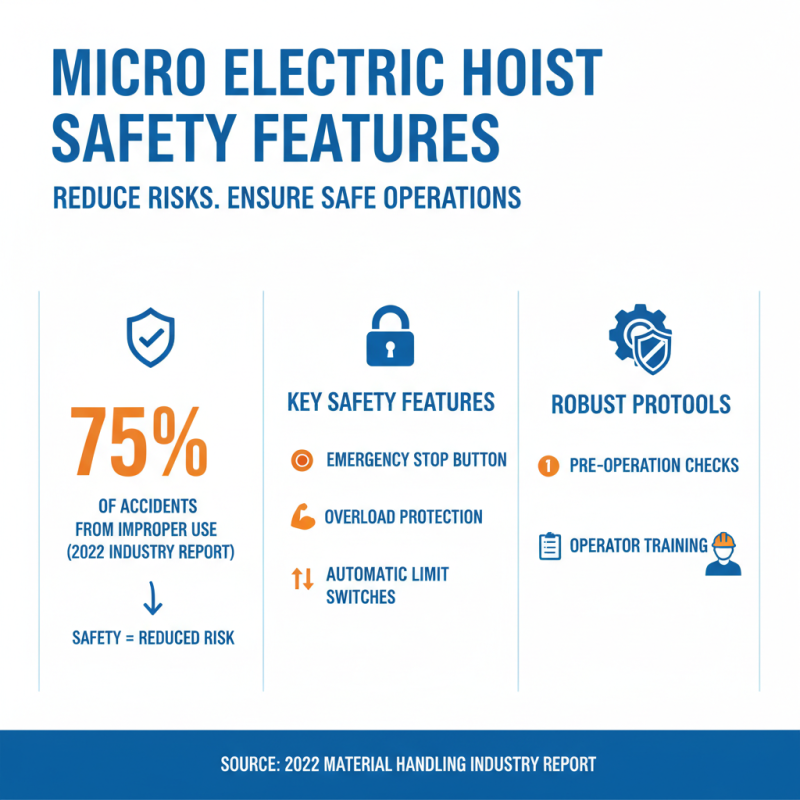
When selecting a micro electric hoist, evaluating safety features is crucial. According to a 2022 industry report, almost 75% of accidents in material handling involve improper use of hoisting equipment. Therefore, ensuring robust safety protocols can significantly reduce risks.
Look for hoists equipped with overload protection. This feature automatically shuts down the unit if it exceeds its weight capacity. A hoist with a load limit alarm can provide an additional safety layer. Many models now include emergency stop buttons, which are vital in urgent situations. Visibility of the control panel is another aspect to consider. If operators cannot see controls clearly, it could lead to mishaps.
Moreover, evaluate the construction materials used. Lightweight materials can be beneficial but may compromise durability. Steel components generally offer better strength and longevity. Research suggests that nearly 60% of users prefer models with reliable warranties. Additionally, safety labels and certifications show compliance with industry standards, assuring users about the hoist's safety. Regular maintenance is often overlooked. A lack of proper upkeep can lead to failures, jeopardizing user safety. Consider these elements carefully when choosing a micro electric hoist to ensure optimal safety.
Assessing Cost vs. Quality for Optimal Purchase Decision
When considering the purchase of a micro electric hoist, cost and quality are pivotal factors. A lower price might initially seem appealing. However, this often comes with sacrifices in quality and durability. Evaluating the materials used in its construction is essential. Cheaper hoists may employ subpar materials that wear out quickly. This leads to more frequent replacements, negating the initial savings. Researching the longevity of different models can provide helpful insights.
In addition to materials, consider the specifications. The lifting capacity and speed influence the efficiency of the hoist. While a low-cost option may lift small items, it might struggle with heavier loads. It’s important to choose a model that meets your specific needs. Furthermore, reviews and user feedback can highlight common issues, helping you make a more informed decision. Do not overlook warranties and customer support as well. A good warranty can be a safety net against unexpected failures. In the end, investing in a quality hoist often pays off in the long run, both in performance and in peace of mind.