What is a Manual Chain Hoist and How Does It Work?
A Manual Chain Hoist is a simple yet powerful tool used for lifting and moving heavy loads. It operates through a system of chains and gears, allowing users to lift objects with minimal effort. This device is common in warehouses, construction sites, and workshops, where heavy lifting is routine.
The key feature of a Manual Chain Hoist is its hand-operated mechanism. Users pull a chain down to raise the load. It may seem straightforward, yet this requires careful handling. Sometimes, users might overlook safety precautions, leading to accidents. Maintenance is crucial as worn parts can compromise performance.
Understanding the Manual Chain Hoist’s operation is vital for safe usage. Users must be aware of their limits and the hoist's capacity. Ignoring these factors can lead to dangerous situations. Embracing this equipment's strengths and acknowledging its potential risks ensures efficient and safe lifting.
What is a Manual Chain Hoist and Its Key Components?
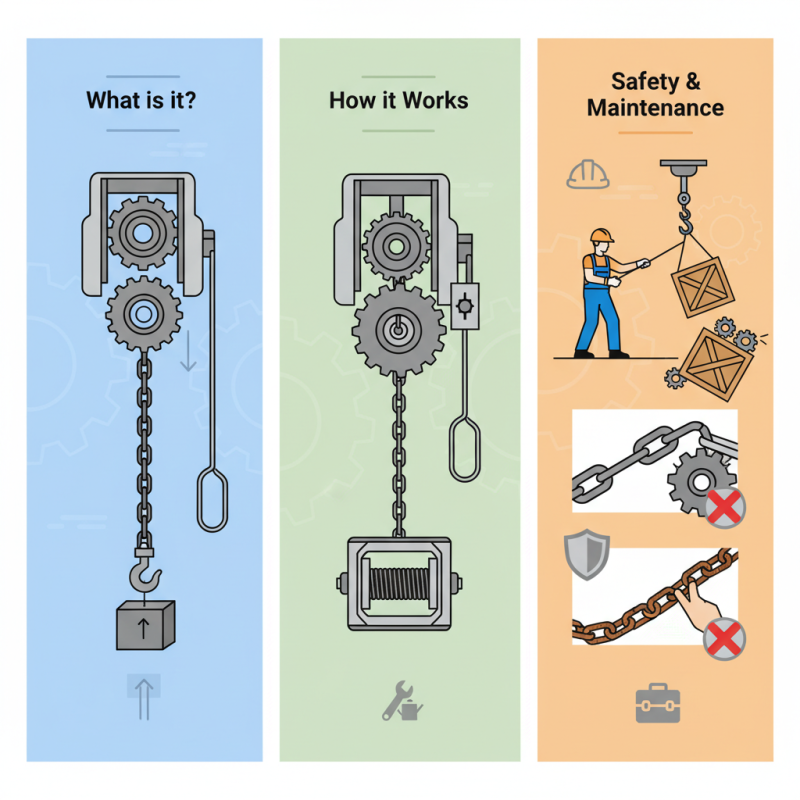
A manual chain hoist is a simple yet powerful lifting device. It operates using a chain and pulley system. This tool allows users to lift heavy objects with minimal effort.
Key components include the hoist body, chain, hook, and hand chain. The hoist body houses gears that convert manual power into lifting force. The chain wraps around pulleys, providing mechanical advantage. The hook attaches to the load, ensuring safety during lifting.
Tips: Always inspect the hoist before use. Look for any wear or damage. An unnoticed defect can lead to accidents.
Adjusting the chain length is crucial. Too long may cause slack; too short can stress the hoist. Balance the load to avoid tipping.
Understanding these components is vital. A user may overlook critical maintenance needs. Ignoring them could lead to failure under heavy loads. Always prioritize safety and proper handling to ensure effective operation.
The Mechanism Behind the Operation of Manual Chain Hoists
Manual chain hoists are simple yet effective tools used in various lifting applications. They consist of a chain, a hook, and a mechanical system that allows users to lift heavy loads with minimal effort. The operation relies on a series of gears and a ratchet mechanism. As the user pulls on the hand chain, the gears engage, lifting the load upwards.
The mechanism is relatively straightforward. When the hand chain is pulled, it rotates a wheel that engages the lifting chain. This action raises the load attached to the hook. It’s worth noting that the hoist operates through a combination of friction and mechanical advantage. However, this can lead to wear and tear over time. Regular maintenance is essential, yet often overlooked.
Understanding this mechanism can also shed light on limitations. Users may find themselves frustrated when the hoist doesn’t lift properly. Perhaps the chain is tangled or the gears are worn down. These small issues can disrupt an entire lifting operation. It's crucial to check the hoist regularly and address any problems before they escalate.
Load Capacity and Safety Ratings: Understanding Specifications
Load capacity and safety ratings are critical when using a manual chain hoist. These specifications determine how much weight a hoist can safely lift. Typically, the load capacity ranges from 0.5 tons to 10 tons, but higher capacities exist for heavy-duty models. It's essential to know your hoist's rated load to prevent accidents.
According to industry reports, a significant percentage of workplace accidents stem from improper use of lifting equipment. Safety ratings reflect this risk. The American Society of Mechanical Engineers (ASME) outlines several standards. These include load tests, quality materials, and safety features. Adhering to these standards boosts reliability and user confidence.
Tip: Always inspect your chain hoist before use. Look for wear, rust, or defects in the chain and hooks. Regular maintenance checks will help ensure safe operation.
Remember, exceeding the load capacity is a temptation in many settings. Operating near the rated load limits may lead to equipment failure. Know your hoist’s specifications and choose wisely. Misjudgments can cost you more than just time. They can jeopardize safety.
Common Applications of Manual Chain Hoists in Various Industries
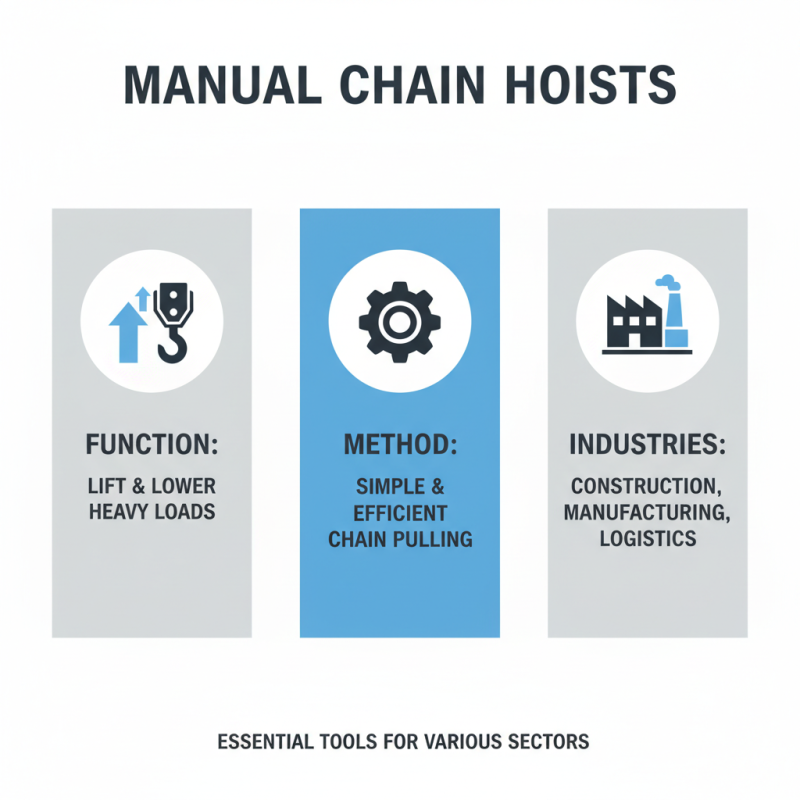
Manual chain hoists are essential tools used across various industries. Their primary function is to lift and lower heavy loads by pulling on a chain. This method is popular due to its simplicity and efficiency. They are frequently utilized in construction, manufacturing, and logistics.
In construction, manual chain hoists play a critical role. A report by the Occupational Safety and Health Administration (OSHA) indicates that over 60% of construction workers rely on these devices for moving materials. These hoists help lift heavy beams and materials to higher elevations, enhancing safety on the job. In manufacturing settings, they assist in the assembly process, lifting components into position with precision. A survey from the National Association of Manufacturers shows that about 45% of factories use manual hoists for daily operations.
Tip: Always assess the load capacity before use. Improper use can lead to accidents.
Logistics is another area where manual chain hoists shine. Loading and unloading cargo requires reliable equipment. Data from the Warehousing Association reveals that 70% of warehouses employ manual chain hoists to streamline operations. They enable workers to effortlessly manage heavy boxes. However, guidelines suggest they should be inspected regularly to ensure safety and efficiency.
Tip: Regular maintenance is key. Simple checks can prevent issues down the line.
Maintenance Tips for Prolonging the Life of Manual Chain Hoists
Manual chain hoists are vital tools for moving heavy loads. Proper maintenance is key to extending their lifespan and ensuring safety.
Regular inspections are necessary. Check for wear on the chain and hooks. Look for signs of rust or corrosion. Lubrication is essential. Use appropriate oil to keep parts moving smoothly. Over time, dirt can accumulate. Cleaning the hoist helps maintain its performance.
Store the hoist in a clean, dry place. This reduces the risk of environmental damage. Avoid overloading the hoist beyond its capacity. It can lead to wear and tear. Remember to replace worn parts immediately. Small issues can quickly turn into larger problems. Reflect on your usage patterns to spot potential improvements. Keeping records of maintenance can also be beneficial.