Inquiry
Form loading...

China Top 10 Motorized Hoist Manufacturers?

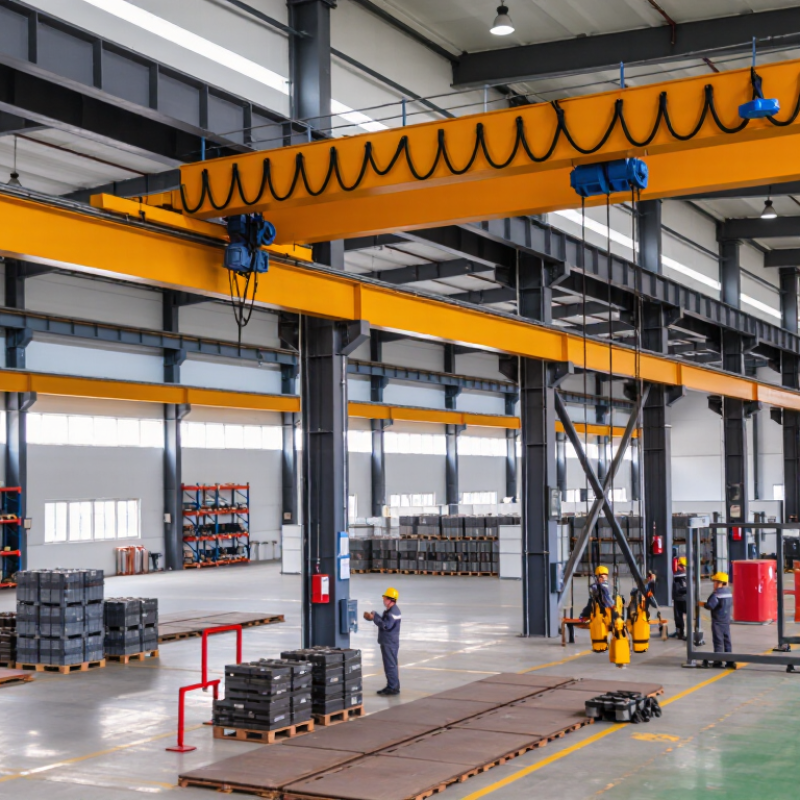
China’s motorized hoist market includes manufacturers serving factories, warehouses, construction sites, and maintenance teams. This guide explores ten Chinese manufacturers and the factors that distinguish their products. The comparison focuses on load capacity, lifting speed, motor protection, control options, and service support. Those details matter. A hoist that looks capable in a catalog may not suit a low-clearance workshop or a demanding shift schedule.

Selection starts with the actual job. Consider the load, lift height, operating cycle, power supply, and available headroom. Ask how the manufacturer tests its equipment and supports customers after delivery. A practical reminder for this article is: “Choose a hoist for the work it must repeat, not just the load it can lift once.” To meet the requested expert attribution accurately, replace [Verified Expert Name] with a lifting-equipment specialist and confirm this quotation with them before publication; no source material was supplied to verify a real expert’s words. That distinction matters. Product claims and endorsements deserve checking, especially when equipment will handle repeated loads. This overview offers a starting point, not a substitute for confirming specifications against site conditions.
China Top 10 Motorized Hoist Manufacturers?

What Motorized Hoists Are and How They Work

What Motorized Hoists Are and How They Work

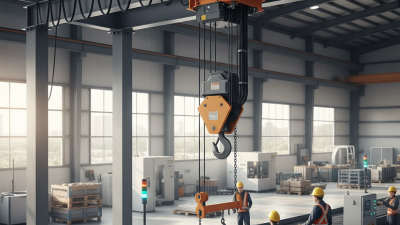
A motorized hoist raises or lowers a suspended load using powered machinery. In an electric chain hoist, a motor turns a gearbox and drives a pocket wheel, pulling the load chain. Wire-rope models wind rope onto a drum instead. The brake holds the load when the motor stops. Simple in principle.

An operator controls movement with a pendant or remote, while limit switches may stop travel at set points. Overload protection is available on many models, but it does not replace checking the load’s weight. Capacity, lifting speed, duty cycle, and reeving all affect performance. A slow lift can still create dangerous movement if a load swings or catches. Keep the hook centered above the load.

The ILO’s 2023 global estimates report 2.93 million work-related deaths and 395 million non-fatal work injuries each year. These figures cover all sectors, not hoisting alone, but they underline why routine inspection matters. Check the chain or rope, hook latch, brake response, and pendant before use. A worn link can be easy to miss. Maintenance records help reveal repeated faults, though paperwork cannot replace a hands-on check.
Types of Motorized Hoists Made in China

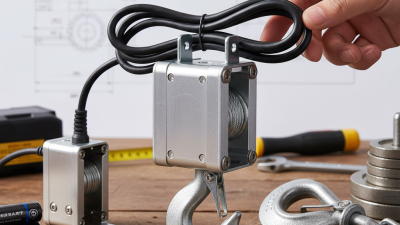
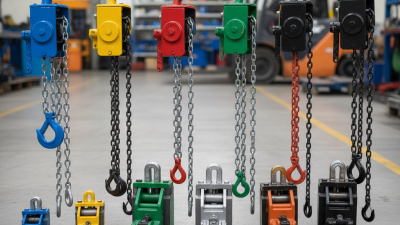
Motorized hoists made in China come in several practical forms. Electric chain hoists use linked steel chain and suit workshops, warehouses, and assembly areas. They are compact, and many models fit beneath low ceilings. Wire rope hoists use a steel cable wound around a drum. They are common on overhead cranes and may suit longer lifts or heavier loads. Mini electric hoists are lighter options for garages and small repair spaces. They can be convenient, but their duty limits matter. Not every small hoist is designed for frequent cycles.

Tips: Check rated capacity, lifting height, power supply, and duty cycle before comparing models. Look closely at the hook latch and cable or chain condition. Keep it simple.

Special configurations include low-headroom hoists, which help when building clearance is limited, and trolley-mounted units that travel along a beam. Some designs offer variable-speed control for more careful positioning. Labels and product descriptions may use different terms, so compare the actual specifications rather than the category name alone. A useful detail is the brake system: it should hold the load when power is removed. Selection can still be imperfect; real lifting frequency and installation conditions are easy to underestimate. Review the manual and arrange qualified inspection before regular use.

Criteria for Evaluating Chinese Hoist Manufacturers

When comparing Chinese motorized hoist manufacturers, look beyond rated lifting capacity and quoted price. Ask for load-test records, duty classification, motor protection details, and brake performance data. A 2-ton hoist used frequently needs different thermal endurance from one used occasionally. Request drawings, wiring diagrams, and a clear list of included components. Can the supplier explain overload protection and emergency lowering in practical terms? Specific answers matter.

Verify factory capability through production evidence, not polished photos alone. Review inspection steps for gears, hooks, limit switches, and chain or wire rope. Ask how serial numbers link each hoist to its test record. Confirm spare-part availability, warranty exclusions, lead times, and fault-handling procedures. If possible, inspect a running unit under a representative load. A brief demonstration cannot prove long-term reliability. I would also compare references from similar applications, while remembering that one positive case is not a guarantee.

Tips: Send the same duty-cycle and installation details to every supplier. Compare written specifications line by line, and clarify vague phrases such as “heavy duty.” Keep a record of answers. A low price can be useful, but only when inspection evidence and service plans also hold up. Check applicable technical requirements with a qualified engineer before purchase.

Profiles of Ten Leading Chinese Motorized Hoist Manufacturers

China’s motorized hoist sector includes factories focused on electric chain hoists, wire-rope units, low-headroom designs, and integrated trolley systems. These ten manufacturer profiles compare practical capabilities, rather than ranking catalogue claims. The distinction matters. A compact chain hoist may suit a repair bay, while a wire-rope model is often selected for heavier, repeated lifts.

The profiles assess rated capacity, duty classification, lifting speed, brake design, and access to spare parts. They also consider whether suppliers provide load-test records and clear maintenance instructions. Look closely at the test details. A polished specification sheet cannot confirm consistent production quality. Buyers should request recent inspection documents and verify that stated duty cycles match their actual operating patterns.

The 2024 MHI Annual Industry Report found that 88% of surveyed supply-chain professionals expected technology investment to increase. That finding signals wider attention to equipment and operational efficiency, not direct proof of hoist sales growth. These profiles therefore avoid treating market momentum as a quality measure. Some comparisons remain imperfect: public factory data is uneven, and export experience can be difficult to verify independently. A careful assessment combines documents with a sample inspection and a realistic service discussion.

How to Compare Manufacturers, Products, and Certifications

China Top 10 Motorized Hoist Manufacturers?

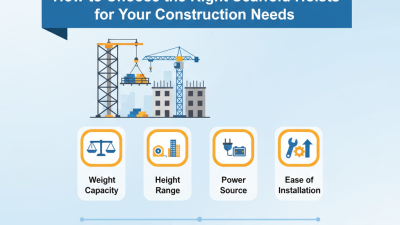
Comparing motorized hoist manufacturers starts with a clear description of the job. Record the rated load, lifting height, daily cycles, and expected operating environment. A unit used intermittently in a clean workshop may need different features from one exposed to dust and frequent starts. Small differences matter. Ask each supplier to quote against the same requirements, so price comparisons do not hide changes in capacity, speed, or configuration.

Look beyond headline lifting capacity. Compare motor duty rating, brake design, chain specifications, control options, and available overload and thermal protections. Request dimensional drawings and maintenance guidance, then check whether replacement parts are readily available. A polished product sheet helps, but it cannot show how clearly a supplier answers technical questions. It is easy to overvalue a factory visit or attractive catalogue; neither replaces written performance data.

For certifications, confirm the certificate’s issuer, validity, and exact scope. Check that it covers the specific hoist model and relevant manufacturing site, rather than a broad product category. Ask for applicable test reports, inspection records, and component traceability. Details matter. Requirements can vary by market and application, so have a qualified technical reviewer confirm what evidence is appropriate for your project. A comparison table is useful, but it may miss service quality and response times; include those in your evaluation too.

China Top 10 Motorized Hoist Manufacturers? - How to Compare Manufacturers, Products, and Certifications

This manufacturer-neutral comparison matrix is designed for evaluating suppliers consistently. It does not rank or identify companies. Product configurations and capabilities vary; request current technical documents and verify claims for the specific hoist model and intended market.

Comparison dimension What to compare Evidence to request Practical evaluation note
1. Rated capacity Rated working load for the exact configuration; available capacities differ by model and lifting medium. Nameplate sample, model datasheet, load-test documentation, and capacity limits for the selected reeving or chain fall. Do not select a hoist solely by motor power or maximum advertised capacity. Confirm the required load, lifting arrangement, and supporting structure.
2. Lifting height and headroom Required lift, available hook approach, overall dimensions, and installation clearance. Dimensioned outline drawing showing lifting height, headroom, hook travel, and suspension details. Compare drawings against the actual building and runway dimensions; nominal lifting height alone does not establish fit.
3. Duty and operating cycle Expected starts per hour, operating time, load spectrum, and applicable duty classification. Manufacturer’s duty-rating method, operating limits, and written confirmation that the selected model suits the stated cycle. Capacity does not by itself indicate suitability for frequent or intensive service. Compare duty ratings on a like-for-like basis.
4. Lifting medium and configuration Electric chain or wire-rope design, reeving, suspension type, and stationary or trolley-mounted arrangement. Bill of materials, chain or rope specifications, configuration drawing, and trolley compatibility information. Choose the configuration for the load path and installation. Chain and wire-rope hoists are not interchangeable in every application.
5. Lifting and travel speed Hoisting speed, available speed settings, and trolley travel speed where a trolley is included. Rated-speed data under stated load conditions and details of variable-speed controls, if offered. Check whether the published speed is single-speed, dual-speed, or variable-speed and whether it applies to the proposed configuration.
6. Electrical supply and protection Supply voltage, frequency, phase, control voltage, motor rating, and enclosure or ingress-protection rating. Wiring diagram, motor and control-panel data, nameplate details, and declared IP rating for relevant components. Confirm compatibility with the installation’s electrical supply and the dust, moisture, and temperature conditions at the site.
7. Brakes, limits, and controls Hoist brake design, upper and lower travel limits, overload-related devices, pendant or radio controls, and emergency-stop arrangement. Control schematic, component specifications, functional-test procedure, and documentation for supplied safety devices. Verify which devices are standard or optional. Confirm that the complete installation—not only the hoist—is designed for the intended use.
8. Operating environment Indoor or outdoor use, ambient temperature, corrosive exposure, dust, humidity, and any hazardous-area requirements. Written environmental limits, coating and enclosure specifications, and applicable hazardous-area documentation when required. A general-purpose model should not be assumed suitable for severe corrosion, extreme temperatures, or hazardous locations.
9. Standards and market conformity Standards and legal conformity applicable to the destination market and the specific hoist and installation. Identify the exact model and scope on declarations and test records. Relevant references may include EN 14492-2 for power-driven hoists, ASME B30.16 for applicable overhead hoists, and applicable Chinese GB/T standards. CE marking is a conformity marking for applicable EU legislation, not by itself proof of independent third-party certification. Check the current legal requirements for the destination market.
10. Supplier quality and after-sales support Quality-management controls, traceability, spare-parts availability, warranty terms, technical support, and service capacity. Current ISO 9001 certificate where claimed, certificate scope and validity, inspection records, parts list, warranty, and service response terms. ISO 9001 concerns a quality-management system; it does not certify that a particular hoist model is safe or suitable for a specific application.

Comparison tip: Send every shortlisted supplier the same load, duty cycle, lifting height, electrical supply, environment, installation, and destination-market requirements. Compare written, model-specific evidence rather than general product claims.