Inquiry
Form loading...

China Top 10 Trolley Crane Manufacturers in 2026?

China’s crane industry is entering 2026 with stronger automation, tighter quality controls, and more demand for customized lifting systems. This guide examines China’s top 10 trolley crane manufacturers through a practical, evidence-based lens. It considers manufacturing experience, engineering capability, product range, export performance, and after-sales support.

A reliable Trolly Crane is more than a painted steel structure. Its performance depends on motor quality, wheel alignment, brake response, control accuracy, and daily maintenance access. In a busy factory, a trolley should move smoothly under changing loads, without harsh vibration or delayed stopping. Small details matter. Poor documentation can create major operating problems.

The selected manufacturers are reviewed using available technical information, company experience, certifications, project references, and customer service records. Where public data is limited, that limitation is clearly recognized rather than hidden. Rankings can also change. A company with strong equipment may not provide the fastest spare parts service in every region. Buyers should verify load capacity, span, lifting height, duty class, installation conditions, and local support before making a decision.

This overview is designed for plant managers, procurement teams, engineers, and international buyers comparing Chinese suppliers. It does not treat advertising claims as proven performance. Instead, it highlights practical strengths, possible weaknesses, and questions worth asking. Some conclusions may remain imperfect. That is normal. Real factory conditions often reveal more than a brochure.
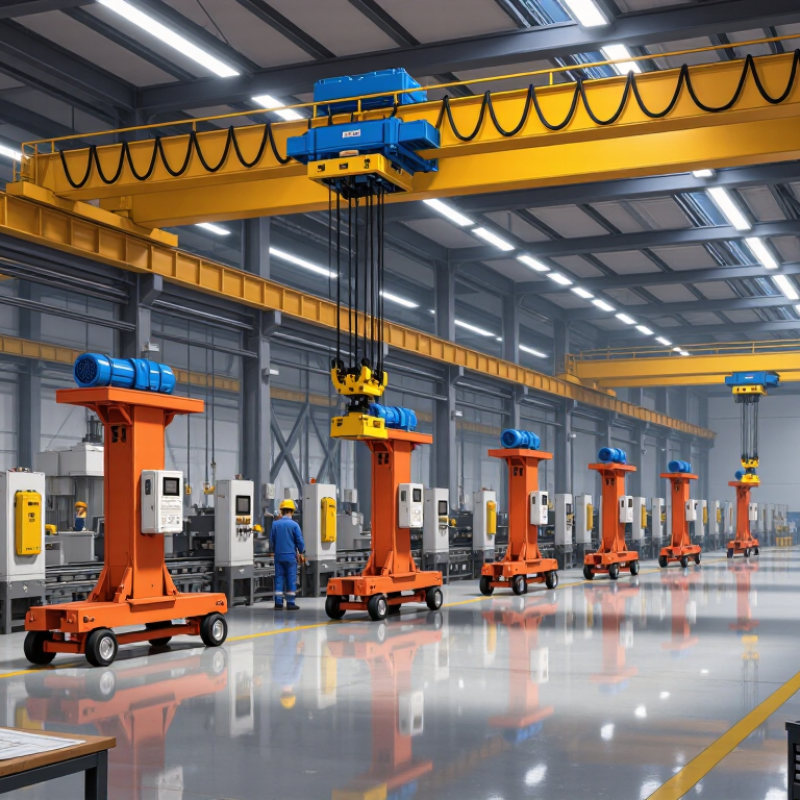
China Top 10 Trolley Crane Manufacturers in 2026?

China’s 2026 Trolley Crane Industry: Types, Loads, and GB/T 3811

China’s 2026 trolley crane industry is moving toward higher capacity, safer control, and more documented design. Mordor Intelligence’s 2025 overhead crane report estimates market growth above 5% annually through 2030. This trend supports demand for electric trolleys in steel plants, warehouses, ports, and equipment factories.

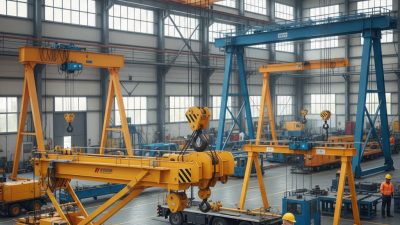
Trolley cranes commonly use single-girder or double-girder structures. Top-running designs suit heavier loads, while under-running systems fit buildings with limited headroom. Rated loads often range from 1 to 50 tonnes, although special projects require higher capacities. The trolley must handle lifting forces, wheel loads, braking forces, and side thrust. These details are easy to underestimate.

GB/T 3811 remains a key Chinese reference for crane design, covering load combinations, stability, strength, fatigue, and safety factors. Engineers should check the working class, lifting mechanism, duty cycle, and environmental conditions before choosing a structure. Wind pressure matters outdoors. Temperature and dust matter indoors too. A 2024 industry brief from the China Hoisting and Conveying Machinery Association reported continued demand for heavy-duty material-handling equipment, especially in manufacturing and logistics. Yet market reports are not perfectly consistent. Some count complete cranes, while others include only components. Buyers should request calculation sheets, test records, and traceable inspection data, not rely on rated capacity alone.

China Top 10 Trolley Crane Manufacturers in 2026? - China’s 2026 Trolley Crane Industry: Types, Loads, and GB/T 3811

Rank Anonymous Manufacturer Profile Primary Trolley Crane Type Typical Rated Load Typical Span Typical Lifting Height Common Duty Classification Typical Application
1 Profile A — Heavy Industrial Crane Manufacturer Double-girder overhead crane with top-running trolley 20–320 t 10.5–34.5 m 6–30 m A5–A7 Steel mills, foundries, machinery plants, and heavy fabrication
2 Profile B — Port and Infrastructure Crane Manufacturer Double-girder gantry crane with trolley travel 20–200 t 18–50 m 9–35 m A5–A7 Ports, precast concrete yards, shipyards, and infrastructure projects
3 Profile C — Standard Workshop Crane Manufacturer Single-girder overhead crane with electric hoist trolley 1–20 t 7.5–31.5 m 6–18 m A3–A5 General manufacturing, warehouses, maintenance workshops, and assembly lines
4 Profile D — Process and Power-Plant Crane Manufacturer Double-girder process crane with enclosed trolley 10–160 t 10.5–28.5 m 8–24 m A5–A6 Power stations, waste-to-energy plants, chemical facilities, and process industries
5 Profile E — Metallurgy Crane Manufacturer Charging, casting, ladle, or grab trolley crane 15–320 t 13.5–34.5 m 8–24 m A6–A8 Steelmaking, metal processing, charging bays, and high-temperature work areas
6 Profile F — Explosion-Protected Crane Manufacturer Explosion-protected single- or double-girder trolley crane 1–50 t 7.5–31.5 m 6–18 m A3–A5 Oil and gas facilities, paint plants, chemical storage, and hazardous production zones
7 Profile G — Low-Headroom Crane Manufacturer Low-headroom single-girder crane with compact trolley 1–16 t 7.5–25.5 m 4.5–16 m A3–A5 Buildings with restricted roof clearance, logistics centers, and compact workshops
8 Profile H — Construction and Precast Crane Manufacturer Rubber-tyred or rail-mounted gantry crane with trolley 5–80 t 18–35 m 6–20 m A4–A6 Precast yards, bridge construction, concrete products, and material storage
9 Profile I — Cleanroom and Precision Handling Crane Manufacturer Precision electric trolley crane for controlled environments 0.5–10 t 6–24 m 4–12 m A2–A4 Electronics, clean manufacturing, laboratory equipment, and precision assembly
10 Profile J — Custom Engineering Crane Manufacturer Customized double-girder trolley crane with integrated automation 10–500 t 12–40 m 8–40 m A5–A8 Special engineering projects, offshore fabrication, hydropower, and oversized-load handling

Technical reference: trolley crane designs for the Chinese market are generally specified and verified against GB/T 3811, including crane load combinations, structural strength, stability, mechanisms, braking, safety devices, and service conditions. Rated-load ranges and duty classifications shown above are typical industry capability ranges, not verified market-share rankings or company-specific claims.

Ranking the Top 10: Capacity, Span, Duty Class, and Export Performance

China Top 10 Trolley Crane Manufacturers in 2026?

A credible ranking should measure more than advertised tonnage. The top ten should be compared by rated capacity, maximum span, duty class, and export evidence. A practical score can assign 30% to capacity, 25% to span, 25% to duty class, and 20% to overseas delivery records. ISO 4301-1 classifications help separate light workshop service from demanding production cycles. That distinction matters. A 20-ton crane used eight hours weekly is not equal to one lifting 20 tons every few minutes.

Export performance needs careful reading. The World Bank Logistics Performance Index 2023 gave China a logistics score of 3.7 out of 5, supporting strong shipment capability, but logistics quality does not prove engineering reliability. UN Comtrade’s HS 8426 data can indicate crane-export activity, although the code also includes other lifting equipment. This limitation should remain visible.

A ranking based only on export volume may reward scale, not field performance. Verified references, installation records, load-test documents, and spare-parts response times offer stronger evidence.

Tips: Ask each shortlisted manufacturer for duty-class calculations, deflection limits, and a full span-load diagram. Check whether the quoted capacity includes the hook block and lifting accessories. Request at least three comparable overseas project references. Also inspect warranty exclusions. They are often overlooked. The ranking may still contain uncertainty, because public data rarely reveals failure rates, maintenance quality, or actual operating hours.

Manufacturer Profiles: ISO 4301 Classes, SWL, Speeds, and Safety Systems

China Top 10 Trolley Crane Manufacturers in 2026

Comparing China’s leading trolley crane manufacturers requires more than checking lifting capacity. A reliable profile should state the ISO 4301 duty class, structural design limits, and working environment. ISO 4301 classification reflects expected load cycles and operating severity. It is not a simple quality score. A crane for occasional workshop lifting needs different endurance from a continuous production-line unit.

Safe Working Load, or SWL, should appear clearly on drawings, nameplates, and operating documents. Profiles should identify hoisting, trolley, and bridge speeds separately. Variable-frequency drives can provide smoother starts and more accurate positioning. That matters when a steel coil moves above a crowded floor. Actual performance still depends on load shape, power supply, rail alignment, and maintenance.

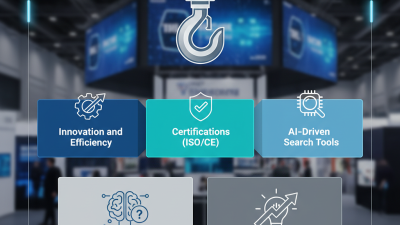
Safety systems deserve equal attention. Look for overload protection, upper-limit switches, emergency stops, fail-safe brakes, hook latches, and anti-collision controls. Outdoor installations may also require wind-speed alarms and rail clamps. Manufacturers with strong engineering practice can provide calculations, inspection records, component traceability, and commissioning support. Ask for evidence, not promises.

A polished brochure can hide weak details. I would compare test procedures and service response carefully. Some specifications seem precise but omit duty-cycle assumptions. That omission can change the real value of a crane.

Comparing the Top 10: Controls, Components, Standards, and Lifecycle Costs

China Top 10 Trolley Crane Manufacturers in 2026?

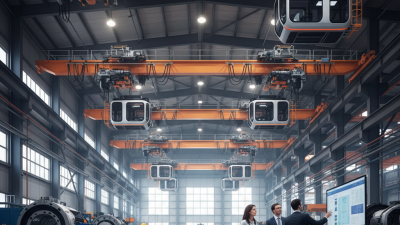
Comparing trolley cranes requires more than lifting capacity and purchase price. Controls often determine daily safety and energy use. Variable-frequency drives provide smoother starts, less wheel shock, and better positioning. Overload protection, emergency stops, brake monitoring, and fault logs should be tested during acceptance. IEC 60204-32 and ISO 13849 offer useful references for electrical and control-system design.

Components deserve equal attention. Inspect the hoist gearbox, rope drum, brakes, trolley wheels, bearings, and festoon system. ISO 4301 helps classify crane duty, while ISO 9927 supports inspection planning. The U.S. Department of Energy’s Motor Systems Market Assessment estimates motors consume about 68% of industrial electricity in manufacturing. Efficient motors matter. Yet efficiency claims can look better on paper than on a dusty factory floor.

Lifecycle cost should include electricity, operator training, spare parts, inspections, downtime, and eventual modernization. McKinsey has reported that predictive maintenance may reduce downtime by about 30% and maintenance costs by 20–25%. These figures are useful, but not universal. A sensor package cannot repair poor lubrication or weak supervision. I would question any comparison using only a five-year payback model. Real cranes often remain in service for 15–25 years, and neglected controls may become obsolete first. A practical 2026 evaluation should request maintenance records, component service intervals, software support terms, and measured energy data from comparable installations.

Selecting a Chinese Trolley Crane: Compliance, Service, and Total Value

China Top 10 Trolley Crane Manufacturers in 2026?

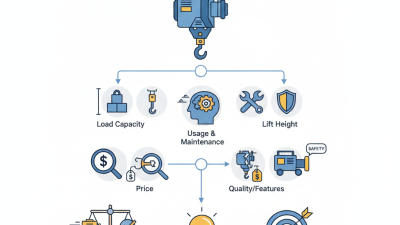
Selecting a Chinese trolley crane requires more than comparing prices. Check whether the design matches your building span, lifting height, duty class, and power supply. Request drawings, load charts, motor data, and inspection records before signing. Compliance must be verified against the standards required in your country. Ask for material certificates, welding procedures, electrical protection details, and test results. A credible manufacturer should explain these documents clearly, not hide behind technical language.

Look closely at factory acceptance testing. Watch the trolley start, stop, travel, and carry a controlled load. Listen for unusual gearbox noise. Inspect cable routing, limit switches, brakes, and emergency controls. Photos are useful, but they are not enough. An independent inspection can reveal poor weld finishing or missing labels. Small details matter. However, even a strong inspection cannot predict every operating problem.

Service support often determines the real value of a crane. Confirm spare-part availability, remote troubleshooting, technician response times, and warranty boundaries in writing. Calculate total cost through installation, training, energy use, maintenance, and downtime. A cheaper trolley may become expensive after repeated delays. In site evaluations, buyers sometimes focus too heavily on the initial quotation. That is understandable, but incomplete. One practical improvement is to score suppliers by documented performance, service capacity, and transparent communication, rather than promises alone.

China Top 10 Trolley Crane Manufacturers in 2026? – Selecting a Chinese Trolley Crane: Compliance, Service, and Total Value

Rather than ranking companies without verifiable and comparable public data, this chart presents key Chinese crane standards that buyers can use to assess compliance documentation, engineering quality, and supplier service capability.

The years shown are the publication years identified in the referenced Chinese national standards. Buyers should confirm the latest effective editions, mandatory applicability, inspection requirements, and project-specific obligations before purchase.