
Inquiry
Form loading...

How to Choose an Electric Hoist Scaffold?

Choosing an Electric Hoist Scaffold requires more than comparing lifting capacity and purchase prices. The right system must match the building height, platform size, working load, and site conditions. A scaffold used beside a clean warehouse differs greatly from one exposed to wind, dust, and uneven ground.

Look closely at the hoist motor, control system, emergency stop, braking performance, and wire rope design. Check the manufacturer’s load chart, inspection guidance, and maintenance requirements. Reliable suppliers should provide clear technical documents, traceable components, and responsive after-sales support. Their recommendations should reflect your actual project, not merely promote the most expensive model.

Safety comes first.

During a site assessment, measure the installation area and identify nearby obstacles, power connections, and access routes. Consider how workers will load materials at different heights. A platform that feels spacious on paper may become crowded with tools, pipes, and protective equipment. The selected Electric Hoist Scaffold should also support stable operation during repeated lifting cycles, not only during a brief demonstration.

Experience matters here. Operators need practical training, while supervisors should understand daily inspections and emergency procedures. Local safety requirements and manufacturer instructions must guide installation and use. A cheaper scaffold may appear efficient, yet unreliable controls or difficult maintenance can create hidden costs. I would also question any specification that sounds perfect. Real projects involve weather changes, delayed materials, and human mistakes. Careful selection leaves room for those realities.
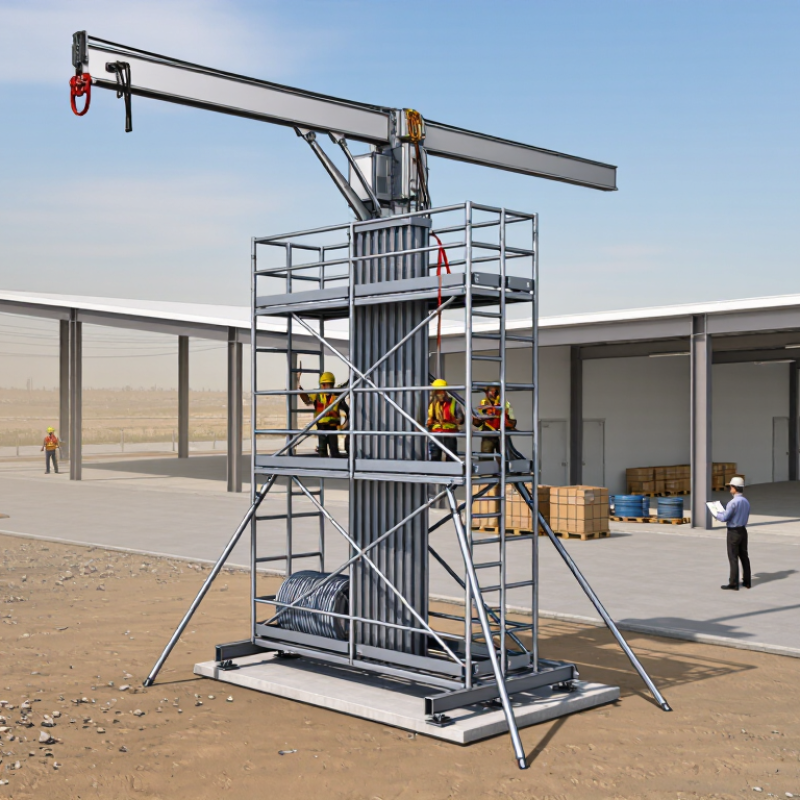
How to Choose an Electric Hoist Scaffold?

Define the Work Requirements for an Electric Hoist Scaffold

How to Choose an Electric Hoist Scaffold?

Define the Work Requirements for an Electric Hoist Scaffold

Start with the work, not the equipment catalogue. Record the building height, lifting distance, platform width, and expected working area. Note the number of workers, tools, and materials carried during each lift. Include their combined weight, not only the heaviest single item. Allowance matters.

Measure the duty cycle carefully. Will the scaffold rise twice daily or operate continuously for several hours? Frequent lifting may require stronger motors, effective cooling, and reliable braking systems. Check the available power supply, cable length, and control position. Outdoor projects also need protection from rain, dust, and temperature changes.

Think about the surface and access points. A narrow roof edge may limit anchoring options. Uneven loading can affect platform stability. Emergency lowering, overload protection, guardrails, and clear communication controls should match the site risk assessment. A competent person should verify the structure and anchorage before use, following applicable local regulations and manufacturer instructions.

Small details are often missed. For example, a platform may fit the façade but leave no room for workers to turn safely. A neat load estimate can also ignore buckets, hoses, and waste materials. Recheck the plan with the actual crew and work sequence. Requirements change on site. That is where a cautious review becomes valuable.

How to Choose an Electric Hoist Scaffold?

Define the Work Requirements for an Electric Hoist Scaffold

Start with the required scaffold service load. The chart uses the six load classes defined in EN 12811-1 and converts each value from kN/m² to an approximate equivalent in kg/m². Select the platform and electric hoist according to the highest expected combination of workers, tools, materials, and operating effects.

Load classes 1–2 are generally associated with inspection, cleaning, painting, and light maintenance. Classes 3–6 support progressively heavier construction and material-handling requirements. The hoist rated capacity must also cover the complete suspended load and must never exceed the scaffold, platform, lifting equipment, or project-specific safety limits.

Check Load Capacity, Platform Size, and Required Working Height

Choosing an electric hoist scaffold starts with the real load, not the advertised capacity. Add workers, tools, materials, hoist components, and possible impact forces. OSHA 29 CFR 1926.451 requires supported scaffolds to carry their own weight and four times the maximum intended load. I still recheck every figure. Small omissions can change the selection.

Platform size affects both productivity and stability. A narrow deck may reduce access, while an oversized deck can increase wind exposure and dead load. Measure the material path, door openings, and required standing space. A practical platform should allow workers to move without stepping around stored materials. The U.S. Bureau of Labor Statistics recorded 885 fatal work injuries involving falls, slips, and trips in 2023. That figure supports treating clear access as a safety requirement, not a comfort feature.

Required working height needs a precise site measurement. Record the highest work point, ground clearance, building setbacks, and overhead obstructions. Then allow enough travel for positioning, without selecting excessive lift capacity. Check the hoist’s rated height, lifting speed, emergency lowering system, and duty cycle. A scaffold that reaches the roof may still fail the job if its platform cannot align with each work zone.

Manufacturer data should be compared with the project’s risk assessment and a competent person’s inspection. Real sites are rarely perfect. That is why conservative calculations matter.

Compare Hoist Power, Lifting Speed, Controls, and Safety Features

Choosing an electric hoist scaffold starts with the load, not the motor label. Calculate the platform, workers, tools, and materials together. Add a practical reserve for wind, friction, and uneven loading. OSHA notes that about 65% of construction workers perform tasks on scaffolds, so daily loading errors deserve serious attention. A low-power hoist may overheat during repeated lifts. An oversized hoist can increase cost and starting impact. Match motor power with duty cycle, available voltage, and lifting height. Lifting speed also matters. A fast unit shortens travel time, but sudden movement can unsettle materials. The advertised speed may be optimistic under real load.

Controls should remain usable while wearing gloves. A low-voltage pendant, emergency stop, guarded switches, and clear direction markings improve handling. Dual-hoist systems need synchronized movement, or the platform may tilt. Useful safety features include upper and lower limit switches, overload protection, automatic braking, and a controlled manual-lowering function. Check the scaffold and hoist against applicable requirements, such as OSHA rules and EN 1808 principles for suspended access equipment. The U.S. Bureau of Labor Statistics recorded 395 fatal construction injuries involving falls, slips, and trips in 2022. That figure does not prove every fall involves hoists, but it supports a cautious design approach. Test the emergency stop under load. Do not assume factory settings are perfect. Records, inspections, and operator training often matter as much as rated capacity.

Verify Site Compatibility, Compliance Standards, and Installation Needs

Choosing an electric hoist scaffold starts with the worksite, not the lifting capacity. Measure the floor area, ceiling height, access routes, and ground condition. Check whether the scaffold can stand level on the actual surface. Uneven concrete, narrow doorways, and overhead pipes can change the safest configuration.

Review the hoist’s rated load, lifting speed, duty cycle, and power supply. Confirm that the electrical system matches the equipment requirements, including voltage, grounding, and protection against moisture. A qualified person should inspect the structure, controls, emergency stop, cables, limit devices, and attachment points before use. Verify compliance with applicable scaffolding, lifting, electrical, and workplace safety standards. Requirements vary by location, so local authority guidance matters. Do not rely only on a supplier’s checklist. On real sites, small omissions can become serious hazards.

Tips: Leave clearance around moving parts. Test controls without a load first. Keep the operating zone visible and restricted. Record inspections and repairs. Plan how materials will be guided at the landing point.

Installation needs deserve equal attention. Decide where the scaffold will be assembled, how components will be delivered, and who will supervise the setup. Confirm that workers understand load limits and emergency procedures. I have found that rushed installation creates hidden problems, especially with cable routing and platform alignment. That is worth questioning before production begins. Test the complete system under controlled conditions, then recheck it after relocation or major adjustment.

Evaluate Supplier Support, Maintenance, and Total Operating Costs

How to Choose an Electric Hoist Scaffold?

Supplier support often determines whether an electric hoist scaffold remains productive after installation. Ask how quickly technical staff respond to faults. Confirm whether operating manuals, wiring diagrams, and inspection guidance are included. Reliable suppliers should provide operator training and clear emergency procedures. Spare parts availability matters, especially for brakes, control switches, cables, and limit devices. A cheap unit becomes expensive when one small component causes several days of downtime.

Maintenance planning should be practical, not promotional. Request a recommended service schedule based on lifting frequency, load conditions, and site exposure. Check whether technicians can inspect the hoist locally. Keep records of inspections, repairs, unusual sounds, and lifting performance. These details help identify wear before failure. Still, maintenance estimates are never perfect. Dust, moisture, overuse, and rushed operators can change the real workload.

Tips: Compare total operating costs, not only the purchase price. Include electricity, scheduled servicing, spare parts, training, inspections, transport, and downtime. Ask suppliers for realistic service intervals and typical repair times. Then compare those figures with your expected daily usage. A simple spreadsheet can reveal the better option. Also, test the controls and emergency stop before approval. Small controls matter. A scaffold that is easy to maintain usually supports safer, steadier work.

How to Choose an Electric Hoist Scaffold? - Evaluate Supplier Support, Maintenance, and Total Operating Costs

Evaluation Dimension Recommended Weight Measurable Requirement or Benchmark Evidence to Request from the Supplier Cost or Risk Impact
Rated lifting capacity 15% The rated load must exceed the heaviest planned load, including tools and accessories. Do not use the rated capacity as a working target; maintain a documented safety margin. Load chart, technical datasheet, test certificate, and confirmation of the maximum permitted scaffold configuration. Insufficient capacity can cause unsafe operation, accelerated wear, or rejection during inspection.
Lifting speed and duty cycle 8% Compare rated lifting speed under load, operating time per hour, number of lifts per shift, and motor duty classification. Select a duty rating suitable for the actual work cycle rather than relying on no-load speed. Performance curve, duty-cycle rating, thermal protection details, and a demonstration using the planned load. A higher purchase price may be justified when it reduces waiting time and overheating-related downtime.
Electrical compatibility 8% Verify voltage, phase, frequency, rated current, plug type, protection rating, cable length, and compatibility with the site's residual-current protection. Electrical nameplate, wiring diagram, protection-class information, and commissioning checklist. Mismatched supply requirements may require temporary distribution equipment or create nuisance trips and installation delays.
Control and emergency systems 10% The control pendant should provide clear up/down operation, an emergency stop, reliable cable strain relief, and protection against unintended restart after power loss. Functional test record, emergency-stop test procedure, control-circuit diagram, and user manual. Poor controls increase operator error, incident exposure, and troubleshooting time.
Overload and travel protection 10% Confirm the presence and test method for overload protection, upper/lower limit devices where applicable, mechanical brake performance, and load-chain or wire-rope end protection. Factory test report, inspection points, replacement limits, and proof-load or functional-test documentation. Effective protection reduces the probability and severity of overload, dropped-load, and collision events.
Supplier response and technical support 12% Set measurable service targets: quotation response within 2 business days, technical-question response within 1 business day, and a defined escalation contact for urgent failures. Written service-level terms, support hours, escalation flow, service coverage area, and sample troubleshooting procedure. Faster technical support can reduce idle labor, crane or scaffold rental extensions, and project delays.
Spare-parts availability 10% Confirm availability of brakes, contactors, pendant controls, cables, chains, hooks, limit switches, fuses, and fast-moving wear parts. A practical target is a documented parts lead time of 5–10 business days for common items. Parts list, stock policy, lead-time commitment, obsolescence policy, and maintenance-kit pricing. Long lead times can cost more than the replacement part because equipment and labor remain idle.
Preventive-maintenance requirements 8% The supplier should define pre-use checks, periodic inspections, lubrication points, brake checks, electrical checks, and replacement criteria based on operating hours and load cycles. Maintenance schedule, inspection checklist, lubrication specification, and service log template. Clear intervals improve reliability and make labor and consumable costs predictable.
Inspection, training, and documentation 7% Require operating instructions, inspection records, assembly or installation instructions, operator training, and documentation aligned with applicable local lifting-equipment rules. Manuals in the operating language, training attendance record, conformity documents, and inspection certificates where required. Complete records support safe operation, audits, handover, and future resale or redeployment.
Purchase price 5% Compare the complete delivered package, including hoist, mounting equipment, controls, cables, delivery, installation, commissioning, training, and taxes. Itemized quotation with inclusions, exclusions, validity period, payment terms, and installation assumptions. The lowest equipment price may not be the lowest delivered or operating cost.
Energy and operating cost 5% Estimate annual energy cost using: motor input power (kW) × operating hours × electricity tariff. Include standby consumption only when it is material. Rated input power, efficiency data if available, expected duty cycle, and local electricity-rate assumptions. Energy is usually a smaller cost than labor and downtime, but it becomes significant at high utilization.
Warranty and lifecycle coverage 2% Compare warranty duration, covered components, labor and travel coverage, exclusions, claim procedure, and whether unauthorized repairs affect coverage. Full warranty terms, claim timeline, service-location list, and escalation process. A clear warranty reduces exposure to early component failure and unexpected repair charges.
Total Operating Cost Formula: Total operating cost = purchase and installation cost + energy cost + preventive maintenance + repairs and spare parts + inspection and training + downtime cost − residual value.
Scoring method: Score each dimension from 1 to 5, multiply by the recommended weight, and compare the weighted total. Verify all capacity, inspection, electrical, and safety requirements against the applicable regulations and the supplier’s current technical documentation.