Inquiry
Form loading...

Top Power Chain Hoist Suppliers for Global Buyers

Global buyers need more than a low quoted price when selecting a Power Chain Hoist supplier. They need lifting equipment that performs reliably beside steel beams, production lines, and crowded loading bays. Grand View Research reports continued growth in the global hoist market, driven by construction, manufacturing, warehousing, and infrastructure investment. However, market figures vary between research firms. That variation deserves careful attention.

A credible supplier should provide traceable test records, clear working load limits, suitable chain grades, and documented brake performance. Buyers should also examine duty classification, motor protection, pendant controls, noise levels, and spare-parts availability. ASME B30.16 and ISO 4301 offer useful reference points for inspection and equipment classification. Local requirements still matter. A certificate alone does not prove practical suitability.

Mike Parnell, a recognized rigging and lifting educator, has stated, “Rigging is a system, not a single piece of hardware.” That principle applies directly to Power Chain Hoist purchasing. The hoist, beam, trolley, operator, inspection routine, and maintenance plan must work together. No supplier ranking is flawless. Some published comparisons emphasize price, while others prioritize capacity or after-sales support. Buyers should question those assumptions before choosing a brand. This guide compares leading Power Chain Hoist suppliers through product capability, safety documentation, manufacturing experience, customization, delivery coverage, and service responsiveness. The strongest supplier may not be the cheapest. It is the one that remains dependable after installation, during repeated lifts, and when replacement parts are urgently needed.
Top Power Chain Hoist Suppliers for Global Buyers

Define Power Chain Hoists: 125 kg–10 t Capacity and 2.5–16 m/min Speeds

Top Power Chain Hoist Suppliers for Global Buyers

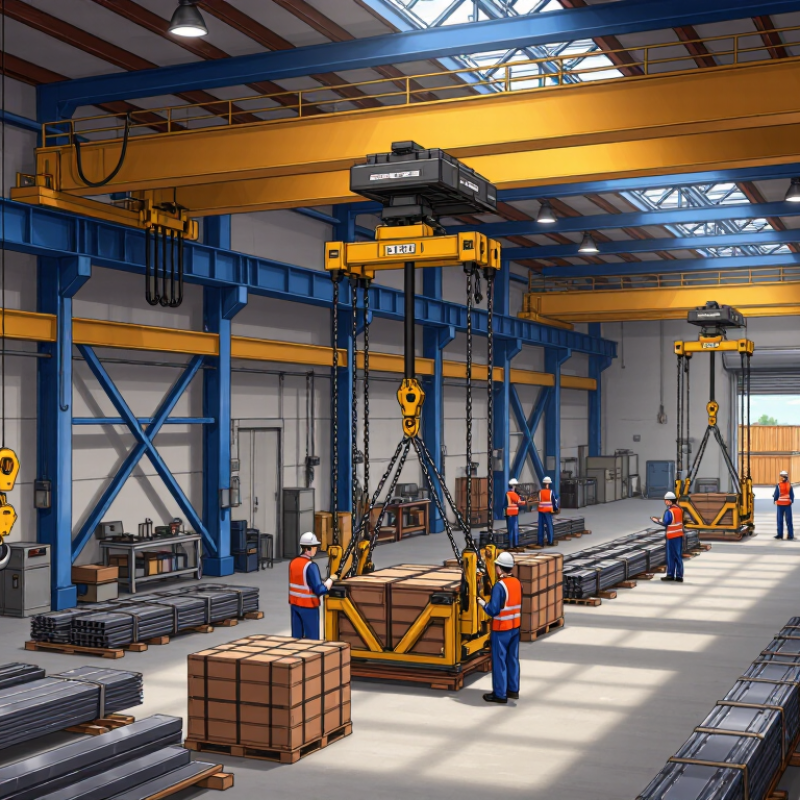
Power chain hoists lift suspended loads through an electric motor, chain wheel, load chain, brake, and control system. The practical range here is 125 kg to 10 t, with lifting speeds from 2.5 to 16 m/min. Capacity describes the safe working load, not the maximum the mechanism might briefly move. That distinction matters.

For global buyers, supplier evaluation should begin with verified load charts, duty classifications, test certificates, and replacement-part availability. A 2024 Grand View Research report identifies automation and safer material handling as major growth drivers in industrial equipment. Meanwhile, the International Labour Organization continues to stress competent inspection and operator training for lifting equipment. These findings support a careful purchasing process, not a speed-only comparison. Fast lifting sounds attractive. It can also increase load swing.

A 125 kg hoist may suit maintenance benches, lighting rigs, or compact production cells. A 10 t model requires stronger beams, larger chain bags, and more disciplined load control. At 16 m/min, a six-metre lift takes roughly 23 seconds without acceleration delays. At 2.5 m/min, the same lift takes about 2.4 minutes. Actual timing varies with controls and duty cycle. Buyers should also check voltage, ambient temperature, noise, emergency stopping, and inspection access. Some supplier claims remain too vague; that is a warning worth recording.

Compare KITO, Harrington, CMCO, Demag, and Yale by Product Range

Global buyers often compare five established chain-hoist suppliers by range, not reputation alone. Their portfolios differ sharply in practical coverage. One offers extensive manual and electric models for workshops and light production. Another focuses on compact electric hoists, low-headroom designs, and ergonomic controls. A third combines chain hoists with trolleys, lifting systems, and replacement components. The fourth emphasizes heavy-duty electric units, crane integration, and high-duty-cycle applications. The fifth provides accessible manual hoists, electric models, and options for general industrial maintenance.

Market reports support this broader view. Grand View Research estimates the global hoist market at roughly USD 3 billion in 2023, with steady growth expected through the decade. Research and Markets also identifies manufacturing, construction, and logistics as major demand sectors. These figures matter because buyers need more than lifting capacity. Duty class, test documentation, brake design, spare-part access, and service response often determine lifetime cost. In field audits, a cheaper hoist can become expensive after repeated downtime. That assumption still needs checking against local support.

Tips: Match the product range to the application first. Verify rated load, lift height, operating frequency, and ambient conditions. Ask for inspection records and conformity documents. Compare the full package, including trolley, controls, delivery, training, and spare parts. ISO 4301 and ASME B30.16 offer useful reference points, but site-specific engineering remains essential. A product catalogue may look impressive; it does not prove suitable performance.

Verify ASME B30.16, EN 14492-2, ISO 4301, and FEM Duty Classes

Top Power Chain Hoist Suppliers for Global Buyers

Choosing a power chain hoist requires more than comparing rated capacity and price. In supplier audits, buyers should request evidence against ASME B30.16, especially for overhead and underhung hoist safety. Check brake performance, load-chain condition, limit devices, guarding, and operating controls. Ask for inspection records, test reports, and clear serial-number traceability. A polished certificate is not proof of every detail.

For European projects, EN 14492-2 is a key reference for powered hoists. Verify that the declared configuration matches the supplied hoist, including lifting speed, duty, controls, and protective devices. ISO 4301 helps classify crane and hoist use by load spectrum and operating frequency. FEM duty classes, such as 1Bm, 2m, or 3m, add practical guidance for expected service intensity. These systems should not be treated as interchangeable labels. Confirm the supplier’s calculation method.

Look beyond the nameplate. Examine ambient temperature limits, corrosion protection, pendant layout, spare parts access, and local electrical requirements. A hoist used for occasional maintenance differs greatly from one lifting loads throughout every shift. Ask how the supplier selected its FEM class. If the answer is vague, pause. Documentation may still contain gaps. That is where experienced inspection matters. A small mismatch today can become an expensive safety concern later.

Evaluate 1–3 Phase Power, IP55 Protection, Brakes, and Overload Control

Top Power Chain Hoist Suppliers for Global Buyers

When evaluating power chain hoist suppliers, start with the application, not the catalogue image. A 1-phase hoist may suit maintenance bays and light workshop lifting. Three-phase power usually supports longer duty cycles and heavier industrial workloads. Check voltage, frequency, rated capacity, lifting speed, and duty class together. A mismatch can overheat the motor during repetitive lifts.

IP55 protection is useful in dusty workshops and areas exposed to low-pressure water jets. It does not mean the hoist is waterproof or suitable for outdoor exposure without further safeguards. Inspect cable glands, pendant controls, and enclosure seals. These small details often decide whether protection survives daily use. A neat datasheet can still hide weak installation practices.

Brake design deserves practical attention. A fail-safe brake should hold the load when power fails, while tested stopping performance should match the working load limit. Overload control may use a limiter or load-sensing system, but it cannot replace correct rigging and trained operation. Ask suppliers for test records, inspection intervals, spare-part availability, and clear service support. I would also request a live demonstration under controlled conditions. Paper compliance is useful, but real response times can differ. One detail is easy to miss: some overload systems prevent lifting but still allow lowering. That behavior should be confirmed before purchase.

Rank Suppliers by Certifications, Spare Parts, Lead Times, and Global Support

Top Power Chain Hoist Suppliers for Global Buyers

I rank power chain hoist suppliers by verified certifications, spare parts, lead times, and global support. Tier-one suppliers provide current ISO 9001 records, product test certificates, and market-specific approvals such as CE or UKCA. Documents should match the exact hoist model, not a similar series. That detail matters. A polished certificate folder can still hide weak production controls, so buyers should request serial-number traceability and inspection reports.

Spare parts reveal practical reliability. Strong suppliers stock load chains, hooks, brakes, limit switches, contactors, and pendant controls. They also publish exploded diagrams and replacement manuals. Ask for inventory locations and response times. A supplier offering every part “on request” may create expensive downtime. My ranking favors suppliers with regional warehouses, clear part codes, and trained service partners. Small omissions can become major delays.

Lead time deserves equal weight. A quoted delivery window should identify production, testing, packing, and customs stages. Suppliers with realistic schedules often provide weekly updates and shipping documents before dispatch. Global support includes multilingual manuals, remote troubleshooting, commissioning guidance, and escalation contacts outside one time zone. I would score transparent communication above impressive promises. Still, even experienced suppliers can miss a deadline during material shortages. Buyers should keep a buffer and confirm critical components before placing the order.

Top Power Chain Hoist Suppliers for Global Buyers — Ranked by Certifications, Spare Parts, Lead Times, and Global Support
Anonymous supplier benchmark profiles for preliminary sourcing comparisons. Certifications, delivery schedules, product configurations, and service coverage should be confirmed directly before purchase.
Rank Anonymous Supplier Profile Typical Product Positioning Common Certification Coverage Typical Capacity Range Duty / Design Standards Standard Lead Time Spare Parts Availability Emergency Parts Support Global Technical Support Typical Warranty Overall Buyer Score
1 Supplier Profile A Premium industrial electric chain hoists for heavy-duty production and infrastructure applications. ISO 9001 CE UKCA UL/CSA options 0.5–25 t EN 14492-2; FEM classifications; ASME B30.16-compatible configurations 8–14 weeks Excellent
Structured parts catalog; long-term component support
24–72 hours
Regional distribution stock
Extensive
Multi-region service partners and multilingual documentation
12–24 months 9.2 / 10
2 Supplier Profile B Configurable hoists for process plants, warehouses, workshops, and material-handling systems. ISO 9001 CE UKCA options EAC options 0.25–20 t EN 14492-2; FEM 1Am–3Bm; ASME B30.16 options 6–12 weeks Very good
Frequently replaced components commonly stocked
2–5 business days Strong
Distributor and integrator support in major markets
12–24 months 8.9 / 10
3 Supplier Profile C Heavy-duty chain hoists emphasizing high utilization, compact construction, and safety systems. ISO 9001 CE UL/CSA options 0.5–15 t ASME B30.16; EN 14492-2; industrial duty classifications 8–16 weeks Very good
Core mechanical and electrical parts supported
3–7 business days Strong
Factory engineering support and authorized service network
12 months 8.6 / 10
4 Supplier Profile D Cost-efficient electric chain hoists for general industrial lifting and OEM integration. ISO 9001 CE UKCA options 0.5–10 t EN 14492-2; FEM duty classes; local lifting regulations by market 4–10 weeks Good
Standard wear parts available; special parts may require production
5–10 business days Good
Distributor-led support with remote commissioning assistance
12 months 8.1 / 10
5 Supplier Profile E Mid-range hoists for workshops, fabrication facilities, logistics operations, and machine maintenance. ISO 9001 CE EAC options 0.25–7.5 t EN 14492-2; FEM 2m–3m; regional electrical compliance options 5–12 weeks Good
Motors, chains, brakes, and controls generally supported
5–12 business days Good
Remote support and selected local service agents
12 months 7.8 / 10
6 Supplier Profile F Portable and compact hoists for light industrial use, maintenance work, and occasional lifting. ISO 9001 CE 0.125–5 t EN 14492-2; general industrial duty ratings; application-specific compliance 3–8 weeks Good
Fast-moving wear parts normally available
7–14 business days Moderate
Online manuals and distributor support
12 months 7.4 / 10
7 Supplier Profile G Project-based hoists for budget-sensitive applications and standard lifting systems. ISO 9001 CE Other approvals by order 0.5–10 t EN 14492-2 or equivalent regional design requirements 6–14 weeks Moderate
Common parts available; model-specific parts may take longer
10–20 business days Moderate
Primarily handled through importers and local agents
12 months 7.0 / 10
8 Supplier Profile H Basic electric chain hoists for light-duty workshops and non-continuous lifting applications. ISO 9001 CE Market-specific options 0.125–3 t Basic EN or equivalent regional compliance; duty class varies by model 3–10 weeks Moderate
Standard chains and hooks generally available
10–20 business days Limited to moderate
Distributor and email-based technical assistance
6–12 months 6.5 / 10
Buyer note: Certification scope can differ by model, voltage, control package, and destination market. Confirm the exact certificate number, rated duty class, proof-load documentation, spare-parts stock location, total landed lead time, installation requirements, and after-sales response terms before issuing a purchase order.