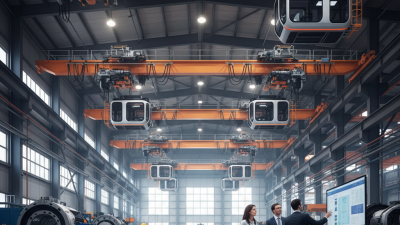
In today's fast-paced industrial landscape, efficiency and safety are paramount. One solution gaining traction is the Monorail Trolley Hoist. This innovative lifting tool is designed to streamline operations, enhance productivity, and ensure safety in various work environments. Companies are continually searching for ways to optimize workflows, and the Monorail Trolley Hoist offers a compelling answer.
Imagine a warehouse where heavy materials are moved with precision and ease. The Monorail Trolley Hoist not only saves time but minimizes the risk of injuries associated with manual lifting. It can handle loads efficiently, allowing workers to focus on their core tasks. However, some businesses still hesitate to adopt this technology, often due to misconceptions about its complexity or cost.
Exploring the benefits of a Monorail Trolley Hoist reveals why it could be a game-changer. From improved safety standards to increased operational output, understanding its advantages is crucial. Each benefit warrants careful consideration, prompting businesses to weigh the value of modernizing their lifting solutions. Embracing this technology could very well redefine how operations are managed, fostering a culture of safety and efficiency.
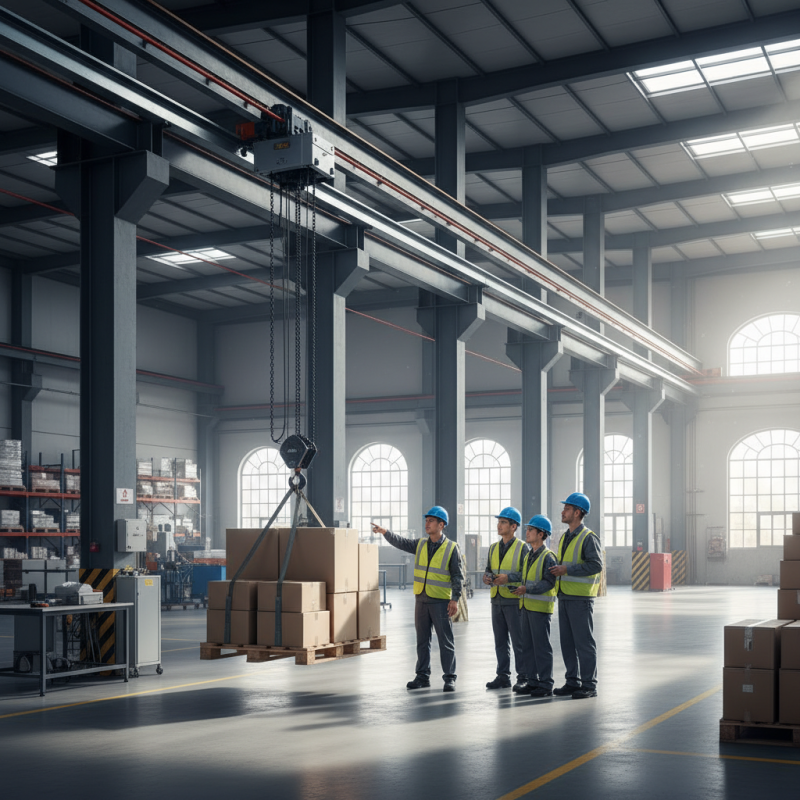
Monorail trolley hoists offer significant advantages in material handling. They enhance efficiency and streamline operations in various industries. With a monorail system, lifting heavy loads becomes safer and faster. This allows workers to stay focused on their tasks rather than struggle with cumbersome lifting. Additionally, the compact design saves valuable floor space, optimizing your layout.
Using monorail trolley hoists can lead to better ergonomics. Workers experience less strain when lifting and moving materials. This can reduce workplace injuries, an ongoing concern in industrial settings. However, it's crucial to train staff on proper usage. Misuse can lead to accidents, highlighting the importance of ongoing education.
Cost savings are another benefit. While initial investment may be significant, the long-term advantages outweigh this. Increased productivity means faster job completion. This can result in greater revenue for businesses. Regular maintenance is necessary to ensure reliability, but this can be overlooked as distractions arise. Keeping up with equipment demands requires a focused effort.
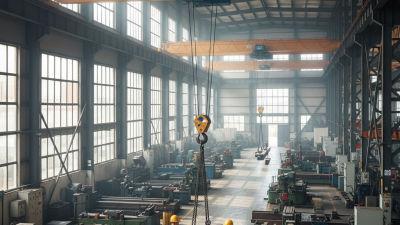
Monorail trolley hoists offer significant advantages for space efficiency in various industrial settings. With their overhead design, they free up valuable floor space. This is especially beneficial in warehouses and factories where space is a premium. The hoists operate along a track, allowing for flexible movement and accessibility. Equipment can lift heavy loads without taking up room on the ground.
By utilizing monorail systems, businesses can optimize workflow. Workers can move equipment or materials quickly and safely. This reduces clutter and enhances safety by minimizing trips and spills on the floor. In many cases, companies have reported increased productivity due to the easy maneuvering of heavy items.
However, integrating monorail systems requires careful planning. Poor track layout can lead to inefficiencies or accidents. It’s crucial to analyze the specific needs of your workspace before implementation. Proper training for operators is also necessary to prevent misuse. An initial investment in a monorail trolley hoist system may be considerable, but the long-term gains in space efficiency and productivity often outweigh these costs.
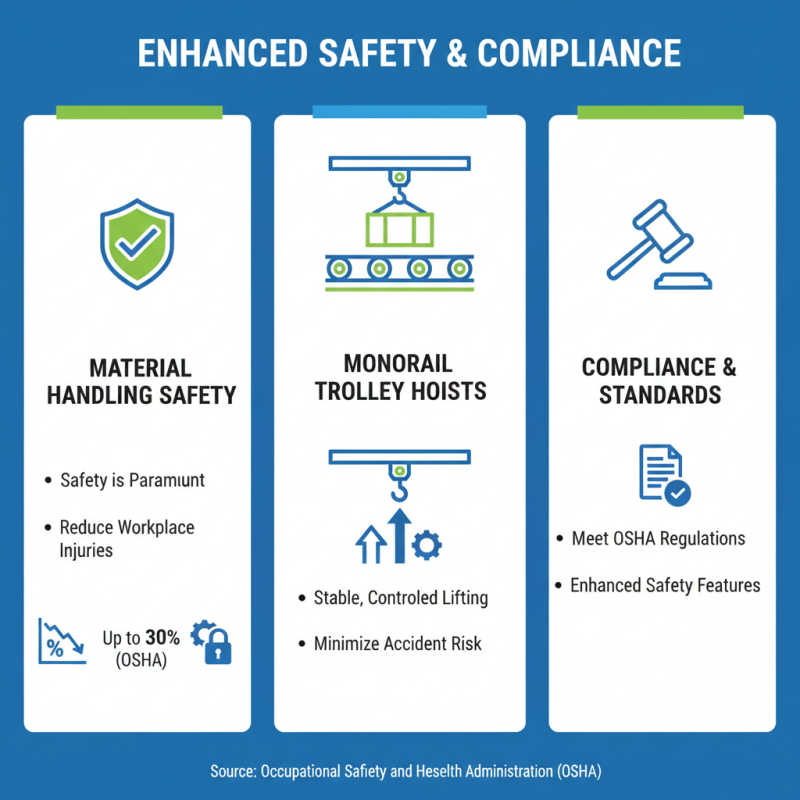
When it comes to material handling, safety is paramount. Monorail trolley hoists enhance safety features for businesses aiming to meet compliance standards. According to the Occupational Safety and Health Administration (OSHA), using proper lifting equipment reduces workplace injuries by up to 30%. These hoists are designed to minimize the risk of accidents by ensuring stable, controlled lifting.
Tip: Regular maintenance checks can prevent accidents. Test the hoist's functionality frequently to ensure it operates smoothly. This practice not only enhances safety but also prolongs the equipment's lifespan.
Many monorail trolley hoists come with built-in safety features such as overload protection and limit switches. These enhancements comply with industry standards, ensuring that operators can work with peace of mind. The integration of technology provides instant feedback on load weight, preventing potential overloading.
Tip: Training employees on the use of these hoists is crucial. Regular training sessions improve overall safety and compliance, fostering a culture of awareness around equipment use.
In adopting these features, businesses not only comply with regulations but also promote a safer work environment. Enhanced safety does not eliminate all risks but significantly lowers them when adhered to diligently.
Monorail trolley hoists have gained attention for their increased load capacity and versatility. Businesses can handle
heavier materials efficiently. According to recent industry reports, monorail
systems can lift up to 10 tons, significantly more than
traditional systems. This increased capacity opens doors for various applications in manufacturing and warehousing.
Operational versatility is another advantage. Monorail systems can be customized for different tasks, accommodating
various workflows. For instance, a single rail can navigate complex layouts, saving space and improving
maneuverability. However, some businesses may struggle with initial setup costs and the need for specific
configurations. It's essential to carefully assess the layout and requirements to maximize utility.
Tip: Before investing, analyze your business's unique needs and workflow. Consider trialing a
system to evaluate effectiveness. Upgrading existing setups might yield better results than a complete overhaul.
Additional training may also be necessary, as operational challenges can arise during integration.
Monorail trolley hoists offer significant cost savings and reduce maintenance efforts for many businesses. According to industry reports, companies implementing these systems can see a 20% decrease in labor costs. This is primarily due to the improved efficiency of material handling, allowing workers to lift and move items with ease. Less time on the job means more resources can be allocated to other business areas.
Regular maintenance is crucial for all machinery, but monorail trolley hoists are designed for ease. Many models feature self-lubricating systems. This reduces the need for constant oiling, saving labor and material costs. Additionally, the robust construction of these hoists means longer lifespans, translating to lower replacement rates. A study showed that proper maintenance can extend equipment lifespan by up to 30%.
Tip: Schedule regular safety checks to ensure optimal performance. Keep records of maintenance to spot patterns. This can help you identify potential issues before they become costly repairs. Observing trends can lead to smarter purchasing decisions in the future. Evaluate your current systems critically, as even small inefficiencies can accumulate over time.
| Benefit | Description | Cost Savings | Maintenance Ease |
|---|---|---|---|
| Space Efficiency | Monorail systems occupy less floor space allowing for better utilization of work areas. | Reduction in real estate costs. | Minimal obstruction; easy to clean around. |
| Increased Productivity | Facilitates faster material handling and transport within the facility. | Less downtime in material movement. | Simple components reduce frequency of breakdowns. |
| Versatility | Can be used in various industries and for different applications. | Cost-effective solution for diverse needs. | Adaptable configurations for easy upgrades. |
| Safety | Designed with safety features to protect operators and equipment. | Reduced accident-related costs. | Regular checks can be performed quickly. |
| Durability | Constructed from robust materials ensuring longevity and lower replacement costs. | Less frequent replacements mean lower expenses. | Materials reduce wear and tear. |
| Customizability | Systems can be tailored to specific operational needs. | Optimal investment for specific applications. | Easy modifications to suit new tasks. |
| Energy Efficiency | Designed to use less energy compared to conventional systems. | Lower electricity bills over time. | Less energy consumption reduces wear. |
| Reduced Noise Pollution | Operates more quietly than other lifting systems. | Less need for noise mitigation solutions. | Fewer components lead to quieter operation. |
| Easy Installation | Quick and straightforward to install, reducing labor costs. | Lower installation costs. | Fewer installation-related issues. |
| Improved Workflow | Enhances the flow of materials and personnel. | Increased overall efficiency leads to higher profit margins. | Minimal interruptions simplify maintenance schedules. |