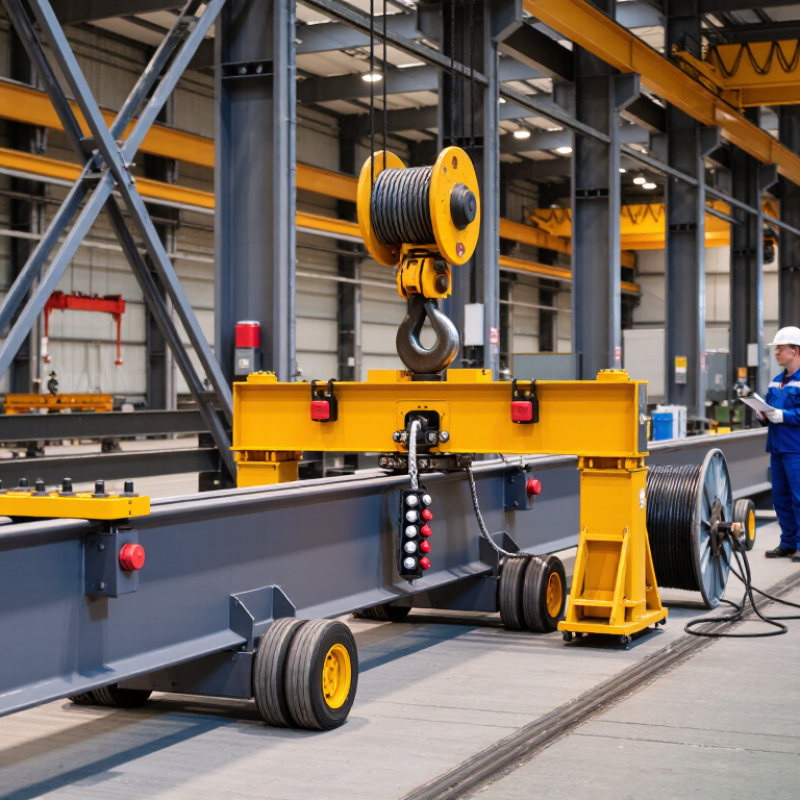
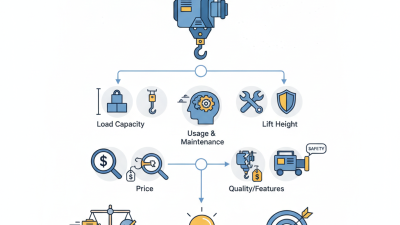
Choosing the right Trolley Crane Hoist requires more than comparing lifting capacity and price. In real workshops, small details often decide whether a hoist performs smoothly or creates repeated delays. A 5-ton model may lift the load, yet its trolley may not suit the beam flange. The correct choice depends on load weight, lifting frequency, travel distance, working environment, and available power. It must also match the crane structure and the operator’s daily workflow.
This guide explains the practical factors behind a reliable selection. It examines rated capacity, duty classification, lifting height, trolley speed, beam compatibility, braking performance, controls, and overload protection. Manufacturer specifications provide a useful starting point, but they should not replace professional assessment. A hoist designed for occasional maintenance may struggle under continuous production demands. That difference is easy to miss.
Details matter.
A sensible evaluation also considers noise, pendant reach, maintenance access, and spare-part support. In field inspections, poor alignment and neglected lubrication have caused more trouble than buyers expected. The strongest specification can still fail through unsuitable installation or weak maintenance planning. That is an important limitation to acknowledge. A careful buyer should review technical documents, installation instructions, inspection records, and site conditions with a qualified lifting professional. This approach supports safer decisions and more predictable operating costs. The goal is not simply to purchase a powerful machine. It is to choose a Trolley Crane Hoist that fits the application, remains serviceable, and performs consistently over time.
Choosing a trolley crane hoist starts with understanding its main types. An electric wire-rope hoist suits heavy loads, long lifts, and frequent production cycles. Its rope drum gives stable vertical movement in busy workshops. An electric chain hoist is more compact and practical for moderate loads. It works well where headroom is limited. Manual chain hoists remain useful for occasional lifting, but they require more operator effort.
Trolley design also changes performance. A top-running trolley travels on rails fixed above the bridge girders. It usually supports higher capacities and longer spans. An under-running trolley moves beneath the runway beams. This arrangement can preserve valuable floor space. Single-girder cranes are often economical for lighter duties. Double-girder cranes provide greater lifting height and structural capacity. The choice is not always obvious.
According to OSHA 1910.179, frequent inspections may range from daily to monthly, while periodic inspections may occur every one to twelve months, depending on service conditions. ASME B30.16 also emphasizes rated capacity, controls, brakes, and inspection procedures. FEM duty classifications consider load spectrum and working time, not capacity alone. A 5-ton hoist used twice daily is not equal to one making hundreds of lifts. I have seen buyers focus on maximum load and overlook duty cycles. That mistake can shorten equipment life. Check headroom, lift height, travel speed, temperature, dust, and expected starts per hour before selecting the hoist. Exact site conditions matter more than a neat specification sheet.
Choosing a trolley crane hoist starts with the load, not the price or appearance. The rated capacity must exceed the heaviest planned load, including lifting fixtures and attachments. A 2-ton load does not automatically require a 2-ton hoist. Regular lifting near the limit increases wear and reduces operating margin.
Lift height also changes the correct choice. Measure the distance from the lowest load position to the highest required position. Then check hook travel, available headroom, and the beam’s installation height. A compact hoist may fit beneath a low roof, while a longer chain or wire rope suits deep lifting areas. Do not estimate this measurement. A few missing centimeters can stop the hook before the load reaches the workbench.
Duty cycle matters too. Occasional maintenance lifting needs different specifications from repeated production work. Consider lifting speed, daily cycles, load shape, and trolley travel distance. Uneven loads require careful rigging and controlled movement. I have seen capacity selected correctly, yet the hoist performed poorly because the trolley lacked suitable beam clearance. That mistake is easy to overlook.
Review the operating environment before purchasing. Dust, moisture, temperature, and limited visibility can affect controls and inspection frequency. Keep written records of load tests and routine checks. The safest selection is based on measured conditions, not a convenient guess. A qualified lifting professional should verify the supporting structure and final configuration before use.
The trolley design determines how smoothly a hoist moves along its runway. A push-type trolley suits light loads and short travel distances. It requires simple controls and little maintenance. Geared trolleys provide better control when operators move heavier loads manually. Motorized trolleys are more suitable for frequent lifting, long travel, or repetitive production work. Check the beam flange width, wheel arrangement, and rated capacity before ordering. A small mismatch can cause uneven movement, wheel wear, or unsafe loading.
Travel configuration deserves equal attention. Straight travel works well in compact workshops with fixed lifting points. Curved or multi-directional travel may improve coverage, but it demands accurate runway alignment and suitable wheel geometry. Consider the required travel speed, stopping frequency, floor space, and headroom. Low-headroom designs can preserve valuable clearance beneath the beam. However, they may limit inspection access. That trade-off is easy to overlook. A careful site survey should record beam dimensions, obstacles, load paths, and the highest hook position.
Tips: Select capacity from the heaviest real load, not an optimistic estimate. Confirm duty cycle and daily operating hours. Check end stops, travel limits, emergency controls, and runway deflection. Leave room for maintenance access. A trolley that fits on paper may perform poorly in a dusty, crowded workspace. Recheck the configuration with a qualified lifting engineer before installation, especially when loads travel above active work areas.
How to Choose the Right Trolley Crane Hoist?
Speed should match the work, not merely look impressive on a specification sheet. A faster hoist can reduce handling time, but it may increase load swing and positioning errors. For assembly areas, choose smooth variable-speed control and a slow approach setting. Trolley travel speed also matters when moving loads across long bays. Measure the actual travel distance, lifting height, and average cycle time before deciding.
Duty class deserves careful attention. Estimate daily operating hours, load frequency, and the percentage of lifts near rated capacity. A hoist used occasionally for light maintenance needs different protection from one running throughout every shift. In practical selection work, operators often underestimate starts and stops. I have seen equipment appear suitable on paper, then struggle under repeated short cycles. Recheck the assumptions.
Tips: Test the pendant or radio control while wearing work gloves. Confirm that emergency stop buttons, upper and lower limit switches, overload protection, brakes, and warning signals are easy to use. Check whether the operator can see the hook and load clearly from normal positions. Keep inspection records accessible. Do not rely on one safety feature. A limit switch can fail. Training, pre-use checks, and clear load markings still matter. Ask a qualified engineer to review unusual loads, side-pulling risks, and installation conditions before purchase.
Choosing a trolley crane hoist starts with the installation area, not the catalog page. Measure beam flange width, runway alignment, headroom, and available power before selecting capacity. A 5-ton hoist is unsuitable if the supporting beam or end connections cannot carry the combined load. Ask a qualified engineer to verify structural calculations, especially in older workshops. Small errors become expensive.
Installation should follow the manufacturer’s instructions and recognized standards, including ASME B30.16 and applicable OSHA requirements. Check hook clearance, trolley wheel contact, limit switches, emergency stops, and pendant controls before lifting. OSHA’s published crane-safety data for 2006–2008 identified an average of 72 work-related crane fatalities annually. That historical figure still deserves attention. A rushed commissioning process is not a minor shortcut.
Maintenance records should show inspections, defects, repairs, and load-test results. Daily operators can check chains, wire ropes, hooks, brakes, and unusual noise. Competent personnel should complete periodic examinations based on service severity, environment, and duty cycle. ISO 9927 provides a useful inspection framework, but local rules may require more. In practice, teams often inspect the hoist yet overlook beam distortion or poor runway alignment. We did that once. The trolley travelled unevenly, and the problem appeared only under load. Compliance also means training operators, controlling suspended-load zones, and retaining clear documentation for audits.
| Decision Dimension | What to Verify | Practical Requirement or Reference Data | Required Evidence | Selection Guidance |
|---|---|---|---|---|
| Rated Load Capacity | Confirm the maximum lifted load, including the load-handling attachment and any below-the-hook equipment. | The hoist rated capacity must be at least the maximum intended lifted load. Never use the hoist above its marked rated capacity or working load limit. | Load list, lifting plan, equipment nameplate, and capacity marking. | Choose the next suitable rated capacity above the calculated maximum; do not use capacity as a substitute for proper load assessment. |
| Load Distribution and Center of Gravity | Check whether loads are balanced, stable, and within the hook and sling arrangement limits. | The lifting point, hook, sling angle, and center of gravity must be suitable for the actual load. Side pulling and dragging are not acceptable normal operating methods. | Lift plan, rigging inspection records, and approved lifting accessories. | Use a hoist only with compatible, inspected rigging and a planned vertical lift. |
| Lift Height and Headroom | Measure the required hook travel, lowest hook position, top obstruction, and available vertical clearance. | Select a chain or wire-rope length that provides the required lift without allowing the load or hook block to contact the hoist, trolley, beam, or surrounding structure. | Dimensioned site survey and hoist outline drawing. | Low-headroom configurations may be appropriate where overhead clearance is restricted, but the manufacturer’s minimum clearances must still be met. |
| Beam Compatibility | Verify beam type, flange width, flange thickness, runway alignment, allowable wheel loads, and end-stop arrangement. | The trolley must be adjusted to the approved beam dimensions and must not operate on a beam that has not been structurally assessed for the imposed loads. | Structural calculations, beam drawings, trolley adjustment data, and installation inspection report. | Obtain structural approval before installation; a correctly rated hoist cannot compensate for an inadequate runway or supporting structure. |
| Trolley Travel Type | Decide whether the trolley will be pushed manually or driven electrically over a fixed runway. | Manual trolleys suit short, light-duty positioning. Geared or powered trolleys are generally better for frequent travel, longer runways, or heavier loads, subject to the duty rating. | Travel distance, cycle estimate, runway layout, and duty classification. | Select the travel method based on frequency, travel distance, operator control, and required positioning accuracy. |
| Duty Cycle and Classification | Estimate lifts per hour, operating hours per day, average load, maximum load, and starts per hour. | Select a duty classification that covers the expected operating spectrum. Duty classifications may be expressed under systems such as ASME HST-1, FEM, or ISO 4301; classifications are not automatically interchangeable. | Application profile and manufacturer duty-rating documentation. | Do not select solely by maximum capacity; inadequate duty rating can accelerate wear, overheating, and fatigue damage. |
| Lifting Speed and Positioning | Define required lifting speed, lowering control, positioning accuracy, and load sensitivity. | Single-speed hoists may suit simple lifting. Two-speed or variable-speed controls can improve positioning where precise placement is required. | Process requirements, cycle-time target, and control-system specification. | Avoid selecting a higher speed when the application requires controlled, low-sway placement. |
| Power Supply and Controls | Confirm voltage, phase, frequency, control voltage, conductor system, pendant or radio control, and isolation arrangements. | Electrical ratings must match the site supply. Controls should provide a clear stop function and prevent unintended operation after power restoration where required by the applicable rules. | Electrical survey, wiring diagram, protection settings, and commissioning test record. | Use qualified electrical personnel for connection, testing, and modification. |
| Brakes and Limit Devices | Check the load brake, upper and lower travel limits where fitted, trolley travel limits, emergency stop, and overload protection. | Safety devices must be installed, accessible, correctly adjusted, and function-tested. Limit switches should not be used routinely as operating stops. | Functional test checklist and commissioning certificate. | Reject equipment with bypassed, damaged, inaccessible, or untested protective devices. |
| Installation and Commissioning | Verify assembly, trolley wheel alignment, fasteners, hook orientation, reeving or chain routing, end stops, grounding, and unloaded and loaded operation. | Installation must follow the manufacturer’s instructions and the requirements of the applicable jurisdiction. A competent person should inspect and test the system before use. | Installation manual, inspection checklist, test results, and acceptance record. | Do not place the hoist into service until installation defects and test failures are closed. |
| Pre-Use Inspection | Inspect the hook, latch, chain or wire rope, brake, controls, pendant, trolley wheels, guards, load chain container, and visible structural components. | Inspection frequency should follow the manufacturer’s instructions and local regulations; defects affecting safe operation require the hoist to be removed from service. | Daily or shift inspection log and defect-tagging procedure. | Train operators to identify deformation, cracks, abnormal noise, damaged controls, excessive wear, and uncontrolled movement. |
| Periodic Examination | Set formal inspection intervals based on use severity, environment, age, service history, and legal requirements. | A periodic inspection is more detailed than a pre-use check and may include measurements, brake tests, fastener checks, electrical tests, and examination of load-bearing parts. | Signed examination report, inspector competence record, and corrective-action log. | Use the shortest applicable interval when regulations, severe service, corrosive conditions, or abnormal events require it. |
| Preventive Maintenance | Plan lubrication, brake inspection, chain or rope condition checks, wheel and bearing checks, electrical inspection, and fastener verification. | Maintenance intervals must follow the equipment manual and actual service conditions. Lubricant must be compatible with the chain, rope, bearings, and operating environment. | Maintenance schedule, parts records, lubrication log, and repair history. | Prioritize condition-based maintenance where load cycles, contamination, heat, moisture, or corrosion are significant. |
| Operating Environment | Assess temperature, humidity, dust, corrosive chemicals, outdoor exposure, washdown, hazardous locations, and ventilation. | Environmental protection, enclosure rating, materials, and electrical classification must be suitable for the location. Standard equipment is not automatically suitable for explosive atmospheres. | Site hazard assessment and environmental suitability documentation. | Specify corrosion protection or hazardous-location equipment only when supported by the relevant certification and application assessment. |
| Operator Safety and Training | Confirm operator authorization, training, communication methods, exclusion zones, and emergency procedures. | Operators should understand rated capacity, pre-use inspection, signaling, load control, prohibited practices, and emergency stop procedures. | Training records, operating procedure, lift plan, and site risk assessment. | Prevent suspended loads from traveling over people unless the applicable risk assessment and regulations specifically permit the operation. |
| Compliance and Documentation | Identify the governing laws, occupational-safety rules, electrical requirements, and recognized crane or hoist standards applicable at the installation site. | Common reference frameworks include ASME B30.16 for overhead hoists, ASME B30.17 for crane and monorail systems, OSHA 29 CFR 1910.179 where applicable in the United States, and ISO 4301 or FEM classification systems. The legally applicable requirements depend on location and equipment type. | Declaration or certificate of conformity where applicable, manuals, nameplate data, inspection certificates, drawings, and test records. | Confirm requirements with the local authority, competent engineer, or qualified safety professional before purchase and commissioning. |
| Lifecycle Cost and Spare Parts | Compare energy use, service access, wear-part availability, downtime risk, inspection cost, and expected replacement intervals. | A lower purchase price may result in higher total cost if the hoist has unsuitable duty classification, limited service support, or difficult-to-source safety-critical parts. | Total-cost estimate, spare-parts list, service plan, and warranty terms. | Choose equipment that can be inspected, maintained, repaired, and documented throughout its intended service life. |

Selection rule: The final hoist and trolley configuration should be approved only after the load, runway structure, duty cycle, environment, installation method, maintenance plan, and locally applicable compliance requirements have been verified by competent personnel.