How to Choose the Right Trolley Crane in 2026?
Choosing the right Trolly Crane in 2026 requires more than comparing lifting capacity and purchase prices. A crane lifting 5 tonnes may perform poorly if its runway is too flexible. A compact workshop may need a shorter span, smoother controls, and lower travel speed. A busy fabrication plant may require higher duty ratings, precise positioning, and dependable braking systems.
This guide examines the practical details behind a reliable selection. We will consider safe working load, lifting height, bridge span, duty cycle, power supply, operating environment, and maintenance access. Humidity, dust, temperature, and uneven floor conditions can affect long-term performance. Control options also matter. Pendant controls may suit simple operations, while radio controls can improve visibility around large loads. Manufacturer specifications should always be checked against site measurements and qualified engineering advice.
Small details often decide the result. A hook that reaches the floor may still fail to serve the highest storage rack. A powerful motor may create unnecessary stress during frequent starts. The lowest quotation can become expensive when spare parts are difficult to obtain. This article offers a practical framework, not a universal answer. Conditions vary. Some recommendations may need revising after a site inspection. That is why reliable suppliers, documented testing, operator training, and scheduled inspections remain essential when selecting equipment for 2026.
Define Trolley Crane Types Using ASME B30.2 and CMAA Class Ratings
How to Choose the Right Trolley Crane in 2026?
Define Trolley Crane Types Using ASME B30.2 and CMAA Class Ratings
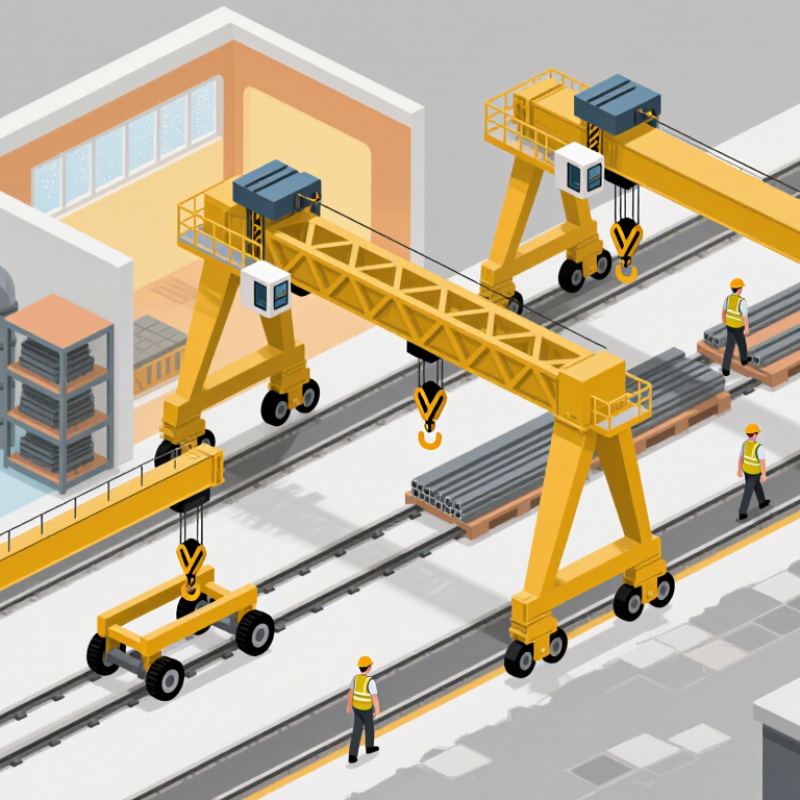
Choosing the right trolley crane in 2026 starts with a clear duty description. A trolley moves the hoist horizontally along a bridge or runway. Its design affects load positioning, wheel loads, controls, and maintenance access. ASME B30.2 provides safety guidance for overhead and gantry cranes. It addresses construction, inspection, testing, operation, and maintenance. Treat it as a safety framework, not a substitute for site-specific engineering.
CMAA class ratings translate work patterns into equipment selection. Class A suits rare, precise handling, such as equipment installation. Class B supports light service with intermittent loads. Class C fits moderate workshop use with regular lifting cycles. Class D handles heavier repetitive service. Class E suits demanding production environments. Class F is designed for continuous, severe-duty operation. Actual limits depend on load spectrum, starts per hour, travel distance, and rated capacity. Verify ratings against current CMAA guidance and engineering calculations.
A recurring field lesson is simple: capacity alone can mislead. A 10-ton crane may still fail the application if the trolley runs hundreds of cycles daily. Record the heaviest load, average load, cycle frequency, speed, and environment. Check headroom and approach dimensions before approving the layout. Do not assume Class E is automatically better. It may add cost, weight, and maintenance demands without helping a lightly used bay. Duty data is often incomplete. Recheck it.
Verify Speed, Headroom, Runway Loads, and Power Requirements Before Buying
How to Choose the Right Trolley Crane in 2026?
Verify Speed, Headroom, Runway Loads, and Power Requirements Before Buying
Choosing a trolley crane starts with the work, not the catalogue. Check required lifting speed, trolley travel speed, and daily operating cycles. A fast trolley may reduce handling time, but sudden acceleration can increase load swing and rail stress. Measure twice. Do not guess.
Headroom deserves careful attention inside low-clearance buildings. Record the floor-to-roof height, beam depth, hook height, and space needed for maintenance. A compact design can protect valuable lifting height, yet limited access may complicate inspections. Leave practical clearance around electrical panels and moving components. Drawings often reveal conflicts that a site visit misses.
Runway loads must include the crane, trolley, lifted load, impact effects, and wheel spacing. Ask a qualified structural engineer to verify runway beams, supports, connections, and foundation capacity. Do not rely on an old load rating without checking its condition. Power requirements also need more than voltage confirmation. Review phase configuration, available amperage, voltage drop, control equipment, emergency isolation, and cable travel. Power quality matters. An underrated supply can cause overheating, nuisance trips, or unreliable starts. In some projects, the original estimate seems adequate until simultaneous equipment use is measured. That mistake is expensive, but preventable. Record real operating conditions before approving the purchase.
How to Choose the Right Trolley Crane in 2026? - Verify Speed, Headroom, Runway Loads, and Power Requirements Before Buying
Typical electric trolley crane selection data for preliminary comparison and runway planning
| Rated Capacity |
Typical Span |
Typical Lift |
Hoist Speed
(Full Load) |
Hoist Speed
(Light Load) |
Trolley Travel Speed |
Minimum Headroom
(Typical Range) |
Estimated Trolley Weight |
Indicative Maximum
Runway Wheel Load |
Typical Hoist Motor Power |
Typical Trolley Motor Power |
Common Power Supply |
Typical Duty Level |
| 2 t |
6–12 m |
6–9 m |
4–6 m/min |
0.7–1.0 m/min |
20/5 m/min |
450–650 mm |
350–650 kg |
18–28 kN |
3–5.5 kW |
0.25–0.75 kW |
380–415 V, 3-phase, 50 Hz |
FEM 2m–3m
ISO M5–M6 |
| 5 t |
8–15 m |
6–12 m |
3–5 m/min |
0.5–0.8 m/min |
20/5 m/min |
600–850 mm |
700–1,200 kg |
38–55 kN |
7.5–11 kW |
0.55–1.5 kW |
380–415 V, 3-phase, 50 Hz |
FEM 2m–3m
ISO M5–M6 |
| 10 t |
10–18 m |
6–12 m |
2.5–4 m/min |
0.4–0.7 m/min |
16/4 m/min |
750–1,050 mm |
1,200–2,000 kg |
72–105 kN |
15–22 kW |
1.1–2.2 kW |
380–415 V, 3-phase, 50 Hz |
FEM 3m–4m
ISO M6–M7 |
| 20 t |
12–22 m |
8–15 m |
2–3.2 m/min |
0.3–0.5 m/min |
12/3 m/min |
950–1,350 mm |
2,200–3,800 kg |
135–190 kN |
30–45 kW |
2.2–4 kW |
380–415 V, 3-phase, 50 Hz |
FEM 3m–4m
ISO M6–M7 |
| 30 t |
14–25 m |
8–18 m |
1.5–2.5 m/min |
0.25–0.4 m/min |
10/2.5 m/min |
1,150–1,650 mm |
3,500–5,800 kg |
205–290 kN |
45–75 kW |
3–5.5 kW |
380–415 V, 3-phase, 50 Hz |
FEM 4m–5m
ISO M7–M8 |
Engineering verification note: The wheel-load figures are preliminary planning values for a powered trolley and lifted load positioned near the most heavily loaded wheel. Final runway design must use the supplier’s certified maximum wheel loads, bridge self-weight, impact factors, skew forces, braking forces, rail tolerances, span, support spacing, and the applicable local structural and crane standards. Motor power and current must also be checked against actual lift speed, reeving, duty cycle, starting frequency, voltage drop, and site ambient conditions.
Compare Safety Features with OSHA 1910.179 Inspection and Limit Standards
How to Choose the Right Trolley Crane in 2026?
Choosing a trolley crane starts with its working environment, load pattern, and inspection requirements. The right model should match the rated load, trolley travel, lifting speed, and available headroom. Under OSHA 1910.179, safety is not proven by appearance alone. Inspection records matter.
Frequent inspections should occur daily to monthly, depending on use and service conditions. Periodic inspections should occur at intervals from one to twelve months. A competent person should examine hooks, wire ropes, chains, brakes, sheaves, electrical equipment, and structural parts. Test the upper-limit device carefully. Never use it as a routine stopping control. Check that rated-load markings remain visible from the operator’s position.
A trolley crane also needs reliable stops, bumpers, warning devices, and travel controls. Its brakes should hold the load without drifting. The trolley should move smoothly, without unusual vibration or sharp noise. Safety comes before speed. Ask for inspection history, maintenance records, and clear instructions before purchase. OSHA requirements provide a baseline, but the actual workplace may demand more frequent checks. A checklist can still miss fatigue damage or poor operator habits. I have seen clean-looking equipment hide worn contact points. That is why hands-on review remains essential, even when paperwork appears complete.
How to Choose the Right Trolley Crane in 2026? Compare Safety Features with OSHA 1910.179 Inspection and Limit Standards
OSHA 1910.179 defines two inspection categories for overhead and gantry cranes. The required interval depends on service conditions, operating severity, environment, and use frequency.
Frequent inspection
OSHA specifies intervals ranging from daily to monthly, with a maximum interval of approximately 30 days.
Periodic inspection
OSHA specifies intervals ranging from 1 to 12 months, with a maximum interval of approximately 365 days.
Rated-load control
The crane’s rated load must be clearly marked and visible from the floor. Loads must not exceed the marked capacity.
Clearance requirement
OSHA 1910.179(b)(6) specifies minimum clearance of 3 inches overhead and 2 inches laterally from obstructions, where applicable.
Reference: OSHA 29 CFR 1910.179, Overhead and Gantry Cranes. Inspection intervals should be established by a qualified person based on actual operating conditions.