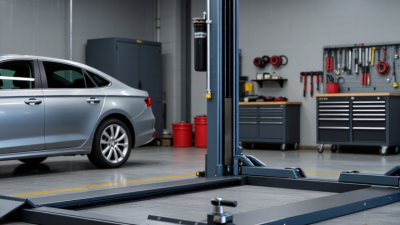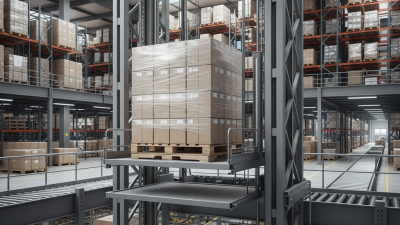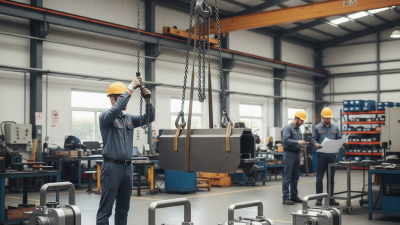
China’s industrial equipment sector is expanding its demand for safer, faster, and more adaptable lifting systems. This trend places the Industrial Hydraulic Lift at the center of factory modernization.
Grand View Research estimates that the global hydraulic equipment market will continue growing through 2030, supported by manufacturing, construction, logistics, and energy projects. Fortune Business Insights also identifies automation and higher load requirements as important market drivers. These reports provide useful direction, but they do not replace factory-level evaluation. A lift rated for 10 tonnes may still perform poorly under uneven loading, harsh dust, or frequent cycling.
China has become a major manufacturing base for hydraulic lifting equipment. Leading suppliers commonly offer scissor lifts, four-post lifts, dock lifts, and customized platforms. Buyers should examine cylinder quality, weld consistency, valve response, emergency lowering, platform stability, and after-sales support. Small details matter. A leaking hose near a loading bay can stop an entire shift.
Fluid power specialist Peter Nachtwey has repeatedly stressed the importance of understanding system behavior: “You cannot control what you do not understand.” His point remains practical. Hydraulic pressure, flow, temperature, and load distribution must work together.
This guide reviews China Top Industrial Hydraulic Lift Manufacturers through an evidence-based lens. It considers certifications, production experience, testing procedures, customization ability, and export reliability. Some supplier claims deserve closer questioning. A polished catalogue is not proof of durable performance. Real factory visits, maintenance records, and independent testing still matter.
China Top Industrial Hydraulic Lift Manufacturers
China’s industrial hydraulic lift market is expanding with warehouse automation, factory modernization, and infrastructure renewal. Fortune Business Insights valued the global hydraulic lift market at about USD 2.31 billion in 2023. Its 2024 forecast indicates steady growth through 2032, supported by industrial material handling and vehicle service demand. China remains a major production base, with extensive steel fabrication, hydraulic component sourcing, and export capacity.
Capacity is visible in practical details. Manufacturers commonly produce scissor lifts, four-post platforms, dock lifts, and custom lifting tables. Typical industrial models handle 1,000 to over 10,000 kilograms, with platform heights adjusted for loading bays, assembly lines, and maintenance floors. Applications are broad. Warehouses use lifts for pallet transfer. Factories use them for ergonomic workstation positioning. Vehicle workshops require stable platforms and controlled descent.
The 2024 market is moving toward electro-hydraulic control, overload protection, and remote fault monitoring. Reports from Grand View Research and IMARC identify automation and safety upgrades as important growth factors in material-handling equipment. However, the data is not perfectly comparable. Some reports measure lift equipment, while others include broader hydraulic machinery. Buyers should verify rated load, duty cycle, cylinder sealing, emergency lowering, and after-sales inspection capability. Cheaper capacity can become expensive downtime. That lesson is easy to overlook.
This chart presents representative rated-capacity benchmarks for common industrial hydraulic-lift applications in 2024. Values are expressed in metric tonnes and are intended for market comparison rather than company or brand ranking.
Heavy-equipment maintenance and aviation applications generally require the highest lifting capacities, while automotive service, warehousing, and loading-dock systems typically use lower-capacity hydraulic lifts. In 2024, demand continued to emphasize higher safety margins, modular installation, energy efficiency, and automated material handling.
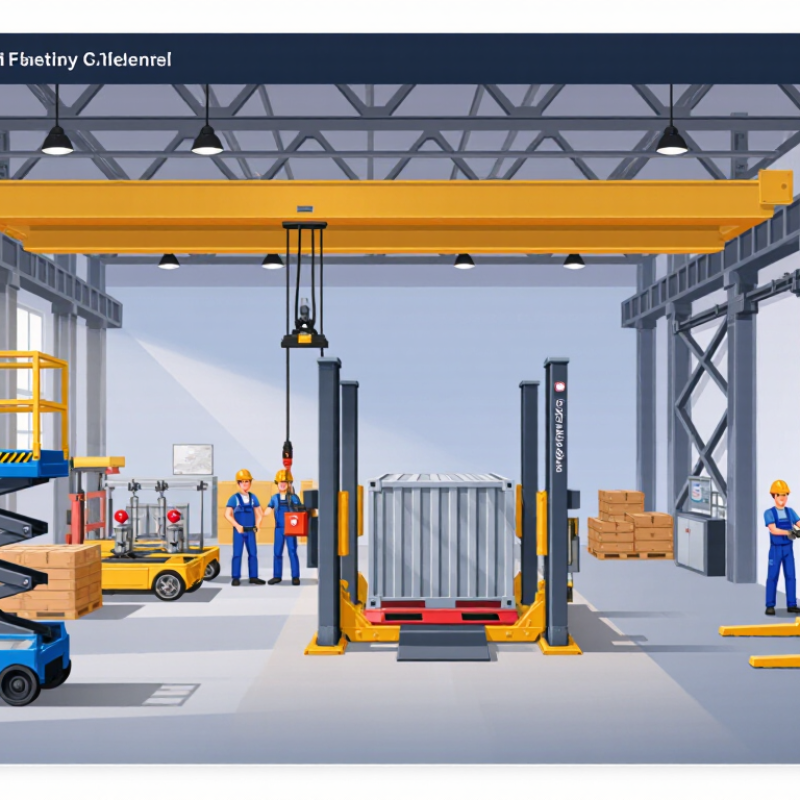
Industrial hydraulic lifts now cover demanding loads from 1 to 100 tons. Scissor lifts suit factories, workshops, and maintenance bays. Four-post lifts provide stable vertical travel for vehicles and heavy platforms. Dock lifts bridge uneven loading heights, while cargo lifts move pallets between floors.
According to Fortune Business Insights, the global scissor lift market reached about USD 2.9 billion in 2023. This growth reflects stronger demand for safer, space-efficient handling equipment.
Experienced Chinese manufacturers should match cylinder size, platform structure, and duty cycle to the application. A 5-ton dock lift needs different protection from a 50-ton cargo lift. Engineers should check rated load, center-of-gravity limits, travel speed, and emergency lowering performance.
ISO 9386-1 and applicable national standards offer useful reference points for powered lifting platforms. However, compliance paperwork alone is not enough. Field testing can reveal frame deflection, oil leakage, or uneven descent. Small details matter.
Tips: Request load-test records, hydraulic schematics, weld inspection results, and maintenance guidance. Confirm whether the stated capacity includes pallets, operators, and impact loads. For scissor models, inspect pinch-point guards closely. For four-post systems, measure floor flatness before installation. Dock and cargo lifts need clear shaft dimensions, gate interlocks, and drainage planning. A lower purchase price may hide higher service costs. That deserves a second look.
China Top Industrial Hydraulic Lift Manufacturers
Key Manufacturing Standards: ISO 4413, EN 1570-1, and GB/T 3811 Compliance
Reliable industrial hydraulic lift manufacturing begins with standards, not marketing claims. ISO 4413 guides hydraulic system safety, including pressure control, hose routing, emergency shutdown, and maintenance access. Engineers should check valve behavior under power loss. They should also document rated pressure and fluid compatibility. Small details matter.
EN 1570-1 addresses safety requirements for lifting tables. It covers stability, guarding, platform movement, trapping risks, and mechanical support during servicing. A competent manufacturer should connect these requirements with practical tests. For example, inspectors can record descent speed, stop distance, and overload response. Visible weld quality helps, but internal defects may remain hidden.
GB/T 3811 provides crane design principles, including load calculations, structural strength, and fatigue considerations. Its application must match the lift’s actual classification and operating conditions. These standards should not be treated as interchangeable certificates. Each project needs a documented risk assessment and a clear compliance matrix. Factory acceptance testing adds evidence through measurements, inspection records, and traceable components.
Experience often exposes weaknesses that drawings miss. A lift may pass a static test yet perform poorly after repeated cycles. That is worth questioning. Manufacturers should review duty cycles, uneven loading, temperature changes, and maintenance habits. Compliance is stronger when engineers explain design decisions, retain test data, and correct recurring faults instead of hiding them.
| Standard / Reference | Primary Scope | Key Manufacturing Focus | Typical Evidence of Conformity | Applicability to Industrial Hydraulic Lifts | Recommended Quality Gate |
|---|---|---|---|---|---|
| ISO 4413:2010 Hydraulic fluid power |
General rules and safety requirements for hydraulic fluid-power systems and their components used on machinery. | System design, hydraulic hazards, pressure control, hose and pipe installation, contamination control, maintenance, and safe energy isolation. | Hydraulic circuit diagrams, component specifications, pressure-test records, hose identification, risk assessment, inspection instructions, and maintenance documentation. | Generally applicable when the lift uses hydraulic power transmission or control. | Verify rated pressure, relief-valve settings, protection against uncontrolled descent, leak prevention, and safe residual-pressure release. |
| EN 1570-1:2011+A1:2014 Safety requirements for lifting tables |
Safety requirements for lifting tables that serve fixed landing levels and are used for lifting or lowering goods or, within defined conditions, persons. | Platform stability, access and loading conditions, mechanical restraint, guarding, trapping-point protection, controls, emergency functions, and safe movement limits. | Design calculations, stability checks, safety-function tests, platform-load tests, guard and gap measurements, control-circuit verification, and operating instructions. | Directly applicable when the product is classified as a lifting table within the standard’s scope. | Confirm the intended use, rated load, number of landings, travel, platform dimensions, guarding arrangement, and applicable exclusion conditions. |
| GB/T 3811-2008 Design rules for cranes |
Design rules for cranes, including general design principles, load combinations, structural design, mechanisms, electrical systems, and safety-related provisions. | Structural strength, fatigue considerations, stability, load cases, welded construction, mechanisms, braking, electrical protection, and environmental operating conditions. | Structural calculations, material certificates, weld inspection records, load-combination assessments, stability calculations, factory test reports, and technical files. | Conditional; relevant where the lift is integrated into crane-related equipment or where the project specification invokes crane design rules. | Define the equipment classification and governing Chinese regulations before applying crane-specific load and structural requirements. |
| Load and Stability Verification Project engineering control |
Confirmation that the complete lift remains structurally adequate and stable under rated and foreseeable operating conditions. | Rated load, eccentric loading, platform deflection, anchor loads, cylinder forces, buckling risk, fatigue exposure, and worst-case operating positions. | Signed engineering calculations, finite-element analysis where appropriate, dimensional drawings, material traceability, and witnessed load-test records. | Required for every project, regardless of the selected standard. | Approve calculations before fabrication and retain a controlled revision history for drawings and specifications. |
| Hydraulic Safety Functions Component and system verification |
Prevention or limitation of hazardous movement caused by pressure loss, hose failure, valve malfunction, overload, or control failure. | Counterbalance or load-holding functions, pressure limitation, hose-burst protection where required, synchronized motion, emergency stopping, and controlled lowering. | Functional test procedures, valve certificates, pressure readings, emergency-stop tests, descent tests, and inspection records. | Essential for hydraulic scissor lifts, dock lifts, vehicle lifts, and industrial platform lifts. | Test each safety function under representative load conditions and record acceptance criteria before shipment. |
| Factory Acceptance and Documentation Supplier qualification checkpoint |
Demonstration that the manufactured unit matches approved design documentation and specified performance requirements. | Dimensional inspection, weld quality, surface treatment, hydraulic cleanliness, no-load and rated-load operation, noise or leakage checks, and final labeling. | Inspection and test plan, manufacturing records, certificates of conformity, user manual, spare-parts list, maintenance schedule, and final inspection report. | Required for supplier comparison without relying on brand or company claims. | Use a documented pass/fail checklist and require corrective-action closure for every nonconformity before dispatch. |
Note: The applicable standard depends on the lift type, intended use, installation environment, load category, and destination market. Compliance should be confirmed against the current edition and all applicable national regulations.
When comparing China’s industrial hydraulic lift manufacturers, load rating is the practical starting point. Common factory platforms range from 500 kg service lifts to 10-ton material lifts. Heavy-duty models often use welded steel frames, larger cylinders, and reinforced guide rails. Load comes first. A published rating is not the whole story. Ask whether it applies to centered loads, moving loads, or uneven pallet placement.
Platform size changes how safely operators position goods. A 1,200 x 1,200 mm platform suits compact pallets, while larger decks support cages, carts, or long components. However, extra deck area can increase structural weight and affect lifting speed. Measure twice. Manufacturers should provide platform drawings, usable dimensions, and edge-clearance details. In real installations, doorways and column spacing often limit the best design.
Lift height separates a basic loading table from a multi-level production solution. Typical options may rise 1.5 to 6 meters, while taller systems require stronger stabilization and closer site review. Look for tested safety mechanisms, emergency lowering, limit switches, and maintenance access. Ask for duty-cycle data, not only maximum height. A lift used 30 times daily needs different engineering from one used twice weekly. I have seen specifications look impressive until the pit depth or power supply was checked. That gap deserves honest attention.
Choosing among China’s top industrial hydraulic lift manufacturers requires more than comparing load ratings. Safety evidence should come first. The U.S. Bureau of Labor Statistics recorded 5,283 fatal workplace injuries in 2023. That figure covers all industries, but it shows why lifting equipment needs documented risk controls. Request structural calculations, overload protection, emergency lowering, guarding details, and proof-test records. ISO 12100 risk assessment and ISO 4413 hydraulic safety principles provide useful benchmarks. A large safety factor is valuable, but an unexplained number is not proof.
Pressure ratings need careful interpretation. A pump’s maximum pressure is not the lift’s safe working pressure. Ask for rated working pressure, relief-valve settings, hose-burst protection, and pressure-holding results at full load. Check performance under cold starts and repeated loading. Real workshops are rarely clean or gentle.
Cycle life deserves equal attention. Require test conditions, load percentage, cycle count, seal inspection results, and maintenance intervals. A “100,000-cycle” claim means little without these details. The International Labour Organization reported nearly 3 million work-related deaths annually worldwide in its latest estimates, reinforcing the value of traceable maintenance and training. After-sales support should include spare-seal availability, response times, manuals, remote diagnostics, and technician training. A low purchase price can become expensive after one failed valve. This is often underestimated.