Inquiry
Form loading...

Best Manual Chain Blocks in 2026 for Global Buyers

Choosing a manual chain block is less about finding the biggest rating and more about matching equipment to the lift. On a busy workshop floor, a compact hoist may need to clear a machine bed, while a warehouse unit may require longer lift travel and frequent repositioning. Manual Chain Blocks use hand-operated chains, so lifting speed, operator effort, and load control matter in everyday work. They are not interchangeable with powered hoists, and a low purchase price alone says little about long-term suitability.

There is no universal winner. For global buyers, compare rated capacity, standard lift length, chain quality, braking design, hook features, and the supplier’s documentation. Check the manufacturer’s specifications and confirm that the product suits the intended duty, mounting point, and operating environment. Requirements and accepted certifications can differ by market, so verify local expectations before ordering rather than assuming one label covers every destination. Ask about spare parts, inspection guidance, warranty terms, and after-sales support, too. Small details count. A stiff hand chain or awkward hook latch can slow a real lift. This guide examines leading options for 2026 through practical selection criteria, while recognizing that product availability and specifications may change. Some comparisons remain imperfect: published data is not always presented in the same way. That is a reason to verify, not guess.
Best Manual Chain Blocks in 2026 for Global Buyers

Explain Manual Chain Block Mechanics and WLL (1 metric tonne ≈ 9.81 kN)

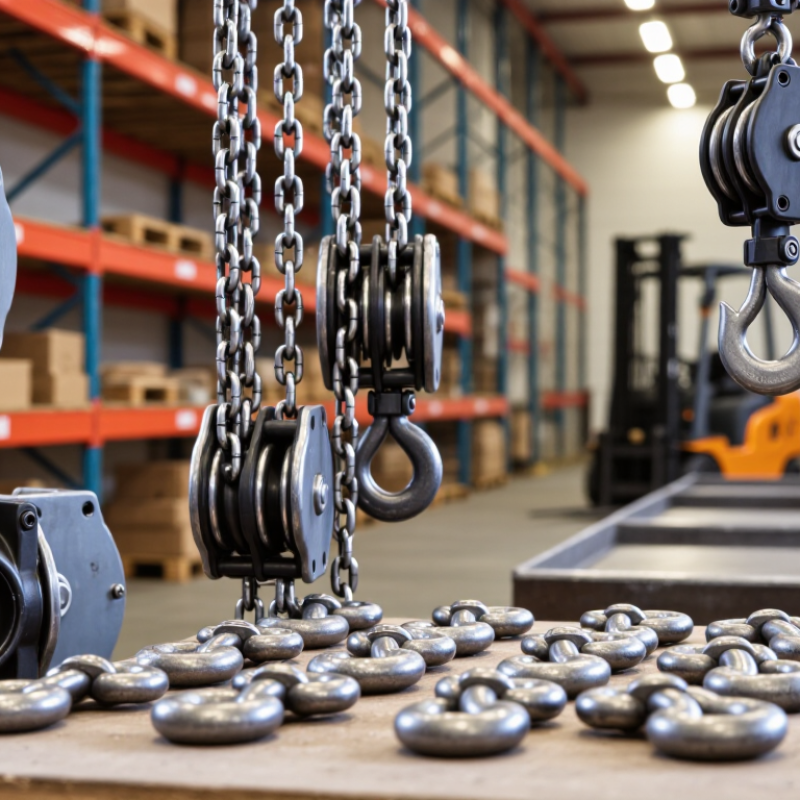
A manual chain block converts a short pull on the hand chain into controlled lifting force. The hand wheel turns a gear train, which rotates the load-chain wheel and raises the hook. A load brake is designed to hold the suspended load when the operator stops pulling. Feel the chain move smoothly. Resistance, jerking, or unusual noise deserves attention before lifting.

WLL means working load limit, not breaking strength. For a static load, one metric tonne of mass weighs about 9.81 kN under standard gravity. NIST’s SP 811 conversion guidance uses 9.80665 m/s², which gives approximately 9.80665 kN per tonne. This is a useful conversion, not permission to exceed the marked WLL. Starting, stopping, or snagging can increase forces; side pulls and poor load balance also create hazards. Small details matter. I have seen capacity math look tidy while the lifting setup was not.

Tips: Read the block’s WLL plate and inspect the chain, hook, latch, and brake before use. Keep the pull aligned with the hoist, and avoid shock loading. If the rating plate is unreadable, pause and verify the unit’s capacity from reliable records. A quick check is never wasted time.
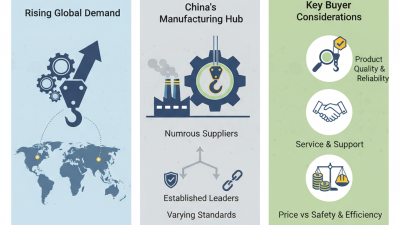
Manual Chain Block WLL and Equivalent Load Force

This chart converts common working load limits (WLL) from metric tonnes to approximate force in kilonewtons using 1 metric tonne ≈ 9.81 kN.

A manual chain block uses a hand chain and internal gearing to turn a load chain wheel and raise or lower a suspended load. WLL is the rated maximum load under specified conditions; it is not a measure of lifting speed. Follow the equipment’s rating and applicable lifting guidance, and account for the load, rigging, and operating conditions.

Match Rated Capacity, Lift Height, and Headroom to the Load Plan

Choosing a manual chain block starts with the heaviest complete load, not the weight of the component alone. Include slings, shackles, and lifting attachments in the load estimate. Then select a rated capacity that covers the planned lift without exceeding the block’s marked limit. ASME B30.16-2022 covers overhead and underhung hoists, including rated-load identification and inspection. Check the equipment documentation, too; model details and duty limits can differ.

Lift height and headroom shape the choice. Measure the vertical travel from the load’s lowest pickup point to its final position. Then measure the clearance above the hook, including the block body and upper hook. A long lift may need extra hand-chain length, while low headroom can make a standard body unusable. Small detail. Big consequence. The UK Health and Safety Executive recorded 25 worker deaths from being struck by a moving object in its 2023/24 fatal-injury statistics; this category is broader than hoisting, but it underlines why a controlled load path matters. HSE’s LOLER guidance also calls for lifting operations to be properly planned by competent people. A neat calculation is not the whole plan: account for awkward load balance, limited sightlines, and where the operator can stand safely.

Compare ASME B30.16 and EN 13157 Requirements for Global Compliance

For global buyers, ASME B30.16 and EN 13157 are useful, but they are not interchangeable checklists. ASME B30.16 addresses the construction, installation, inspection, testing, maintenance, and operation of underhung and stationary hoists. EN 13157 sets safety requirements for manually powered lifting equipment, including hand chain blocks. Check the exact edition and local acceptance rules before placing an order. A neat crosswalk can still miss a market-specific detail.

The practical checks are concrete. Confirm rated capacity, chain identification, load-brake function, markings, instructions, and inspection records. Ask whether test documentation identifies the hoist and its tested load. A clean certificate is not enough. ILO’s 2023 global estimates report 2.93 million work-related deaths and 395 million non-fatal work injuries annually, based on 2019 data. These figures cover all work-related causes, not hoists specifically, but they underline why documented inspection and operator training matter.

For a buyer comparing suppliers, request a clause-by-clause compliance matrix against the required ASME or EN edition, plus evidence for each claim. Verify that the actual supplied configuration matches the paperwork: lift height, chain grade, hook latch, and brake arrangement can differ. This review takes time. It is still cheaper than discovering a mismatch after delivery.

Evaluate Load-Chain Falls, Inspection Criteria, and Safety Features

For global buyers, chain fall length should match the actual lifting height and available headroom. A longer fall may seem convenient, but loose chain can snag or collect on the floor. Measure the lift before comparing models. Check the rated capacity against the heaviest planned load, not an average load. A small mismatch matters.

Inspect the load chain for twisted links, cracks, heavy wear, or corrosion. Look closely at the hook throat, safety latch, and chain guide. The latch should close freely, while the hook should show no visible distortion. Test the brake and hand chain without a load, following the maker’s instructions. Stop and inspect. A clean exterior alone proves little.

Buyers should also verify clear capacity markings, inspection guidance, and access to compatible replacement parts. Confirm that the stated lift height and operating method suit the job site. Safety features vary; do not assume every block includes overload protection. Documentation can be imperfect, and translated instructions may leave gaps. Ask for clarification before purchase, especially when product details conflict. A careful comparison takes time, but it can prevent a costly selection error.

Best Manual Chain Blocks in 2026 for Global Buyers - Evaluate Load-Chain Falls, Inspection Criteria, and Safety Features

Use this comparison as a buying and inspection guide, not as a ranking of specific products. Chain falls and construction vary by model; confirm rated capacity, configuration, dimensions, and applicable certifications against the manufacturer’s documentation and local regulations.

Manual Chain Block Selection and Inspection Guide
Rated Capacity Typical Load-Chain Falls Buyer Evaluation Inspection Criteria Safety Features and Checks
0.5 t Often 1 fall; verify the model-specific configuration. Check headroom, hook-to-hook distance, lift height, and compatibility with the beam trolley or suspension point. Check the load chain for wear, corrosion, twists, damaged links, and correct reeving. Inspect hooks, hook throat, latch, and suspension components. Confirm a functioning load brake and fitted hook latches. Do not use if the brake slips, the latch is missing or damaged, or the chain is defective.
1 t Often 1 fall; some designs differ. Compare rated capacity with the heaviest planned load. Confirm the required lift and available headroom before ordering. Inspect chain links and end attachments, hooks for opening or deformation, and the hand chain for damage or binding. Verify that the load is held securely when the hand chain is released, following the manufacturer’s operating instructions. Check that labels and capacity markings are legible.
2 t Often 2 falls; verify the product data sheet. Account for the extra chain reeving when checking headroom and chain length. Confirm the supporting structure is rated for the load and lifting arrangement. Check that the load chain is correctly seated and reeved, with no crossed or twisted sections. Inspect the block body, suspension point, and hooks. Look for secure hook latches and reliable brake operation. Overload-protection devices are not universal; confirm whether one is fitted and never treat it as a substitute for correct load assessment.
3 t Often 2 falls; arrangements vary by design. Review operating effort at rated load, lift height, headroom, and whether the hoist can be positioned safely for the task. Check chain condition against the manufacturer’s wear limits and inspect hooks, fasteners, hand-chain wheel, and brake components as directed by the manual. Confirm the hoist is marked with its rated capacity and is intended for the required environment. Do not exceed the rating or use the hoist to lift people.
5 t Often 2 falls; confirm before purchase. Check the total suspended load, including rigging, and verify the supporting structure and attachments are suitable for the complete load. Arrange inspection by a competent person at the intervals required by the manufacturer and applicable rules. Remove from service if there are cracks, severe corrosion, chain damage, or abnormal operation. Verify the brake holds the load as specified by the manufacturer and that safety latches, covers, and retaining components are present and functional.
10 t Often 4 falls; model-specific configurations apply. Allow for increased reeving, block size, headroom, and load-chain length. Confirm that the operating position provides a clear, controlled pull. Check all chain parts and reeving points, plus the body, suspension assembly, hooks, and trolley interface if supplied. Follow documented inspection and maintenance procedures. Use only within the marked rating and approved lifting arrangement. Confirm required proof-testing, records, and conformity documentation for the destination market.
20 t Often 8 falls; not a universal configuration. Request a complete technical drawing and data sheet. Verify headroom, chain travel, suspension loads, operating clearance, and compatibility with the structure and lifting plan. Require a documented inspection and maintenance plan appropriate to the duty and local rules. Any damaged, distorted, or abnormally worn component requires assessment before further use. Confirm rated-load markings, brake requirements, supplied safety devices, and applicable conformity documents. Use a competent lifting supervisor and approved procedures for the operation.

Global buyer note: Load-chain fall counts above are common examples only, not fixed rules or a guarantee of a particular product’s performance. Before purchase or use, verify the exact rated capacity, lift, headroom, chain specification, inspection limits, maintenance requirements, and applicable standards for the destination country. Never side-pull, shock-load, or lift a person with a standard manual chain block unless the equipment is specifically designed and approved for that purpose.

Rank 2026 Models by WLL, Test Records, Spare Parts, and Lifecycle Cost

A useful 2026 ranking of manual chain blocks should compare more than headline capacity. Start by grouping models by working load limit (WLL), then check whether each block suits the lift height, frequency, and environment. A 2-tonne rating does not tell you how smoothly a unit handles a suspended load. Review the manufacturer’s stated limits and verify that test records identify the model and production batch. Numbers can mislead. Missing or vague records deserve a lower score, not an assumption of quality.

Next, weigh spare-parts access and lifecycle cost. Ask whether brake components, load chain, and hooks can be ordered separately, and request realistic lead times. Compare purchase price with inspection, maintenance, and likely downtime over several years. A cheaper block may cost more if a small replacement part keeps equipment idle. Rankings should explain their evidence and assumptions; without comparable records, call the result provisional. That is less tidy, but more honest.

Tips: Check that the serial or batch details match the supplied test documents. Get parts pricing in writing. Compare like with like: equal WLL, lift height, and intended duty. Keep a simple cost sheet; overlooked labor can change the ranking.