Inquiry
Form loading...

10 Best Scaffold Hoists for Global Buyers in 2026?

Choosing among the 10 Best Scaffold Hoists for Global Buyers in 2026 requires more than comparing lifting capacity and prices. Buyers must examine duty cycles, platform dimensions, rope systems, emergency brakes, installation needs, and after-sales support. A hoist lifting 500 kilograms on paper may perform differently on a dusty urban site.

Grand View Research identifies construction hoists as a growing equipment market, supported by urban development, renovation, and taller building projects. Mordor Intelligence also reports continued demand for safer and more efficient vertical material transport. These reports provide useful direction, but market estimates are not purchase instructions. Their definitions and regional coverage can differ.

Compliance remains practical, not decorative. OSHA requirements for material hoists and the EN 12159 standard highlight guarding, controls, braking, inspections, and safe operating procedures. Tormod Gunleiksrud, former CEO of Alimak Group, stated, “Safety is a core value for Alimak Group.” That principle fits Scaffold Hoists selection closely. Reliability begins before the first lift.

Real experience still exposes gaps. A compact hoist may suit brickwork, yet struggle with long shifts and frequent repositioning. A powerful motor may increase productivity, but it can also raise energy use and maintenance demands. The shortlist in this guide is useful, not perfect. Regional voltage, spare-part access, operator training, and local service quality can change the final ranking. Global buyers should compare verified specifications, certification documents, warranty terms, and total ownership costs before ordering. Small details matter.
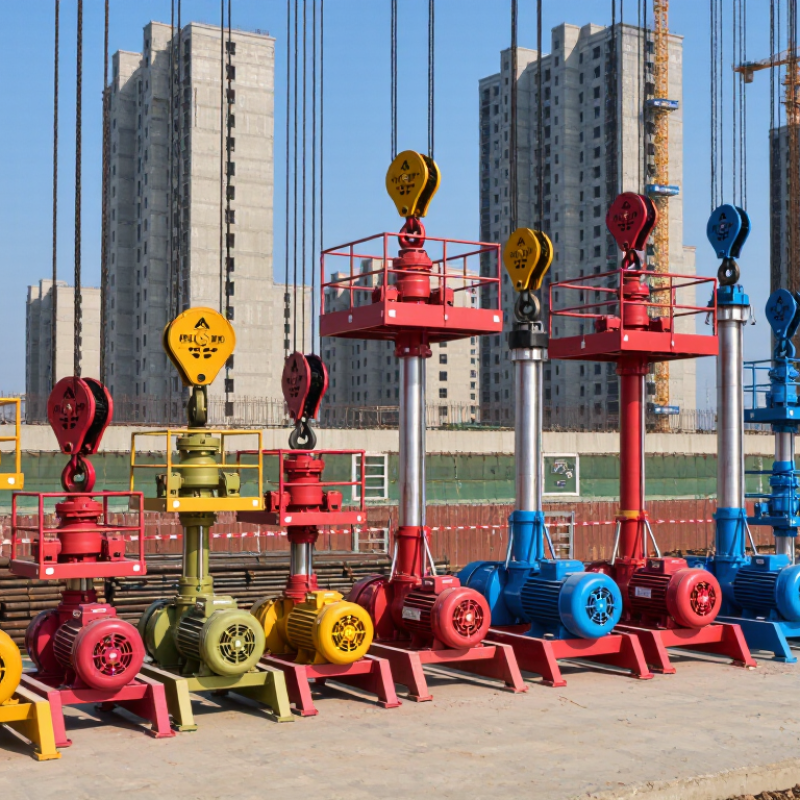
10 Best Scaffold Hoists for Global Buyers in 2026?

Scaffold Hoist Types: Wire-Rope, Rack-and-Pinion, and Material Lifts

10 Best Scaffold Hoists for Global Buyers in 2026

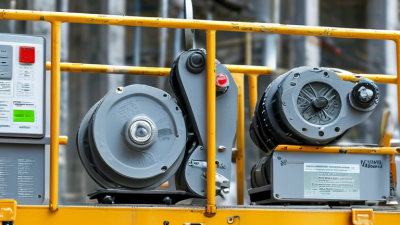
Wire-rope hoists remain practical for vertical material movement on changing sites. They use a drum, cable, platform, and mechanical brake. Their strengths include flexible lifting heights and relatively simple installation. However, cable wear is easy to miss. Daily checks should examine broken strands, drum alignment, guards, and emergency stops.

The U.S. Bureau of Labor Statistics recorded 1,075 fatal injuries in construction during 2023, reinforcing the value of disciplined lifting procedures.

Rack-and-pinion hoists suit repeated movement along fixed mast sections. Their toothed drive system gives stable platform travel and predictable stopping. They can support higher site traffic, but installation quality matters greatly.

Mast alignment, gear engagement, overload protection, and anchorage deserve documented inspection. The European Federation of National Maintenance Societies reports that planned maintenance can reduce equipment downtime substantially, although actual savings vary by site conditions.

Material lifts are usually lighter and simpler. They work well for bricks, tools, panels, and small loads, but they are not passenger elevators. Buyers should verify rated capacity, platform dimensions, lifting speed, power supply, and local conformity requirements.

ISO 4301 classification principles also remind procurement teams to consider duty cycles, not only maximum capacity. That point is often overlooked.

A low-cost hoist may appear efficient, yet frequent lifting can expose weak brakes, poor controls, or undersized components. Global buyers should compare service access, spare-part availability, operator training, and inspection records before selecting among the ten best options.
Core Specifications: 200–1,000 kg SWL and 8–30 m/min Lift Speed

10 Best Scaffold Hoists for Global Buyers in 2026?

Core Specifications: 200–1,000 kg SWL and 8–30 m/min Lift Speed

For global buyers comparing scaffold hoists in 2026, two specifications deserve careful attention: safe working load (SWL) and lifting speed. Models rated from 200 to 1,000 kg cover façade repairs, material staging, and heavier masonry work. A 200 kg unit may suit buckets, tools, and boxed fittings. A 1,000 kg hoist handles denser loads, but only when the scaffold, anchors, and power supply are engineered for it. The hoist is never the only limit.

Lift speeds from 8 to 30 m/min can change daily productivity. At 8 m/min, a 24-meter rise takes about three minutes, excluding loading and landing. At 30 m/min, the same trip takes under one minute. Faster is not automatically better. Operators need controlled starts, reliable braking, and clear communication near crowded platforms.

Check rated speed under load, not merely the no-load figure printed in a brochure. That detail is often overlooked.

Experienced buyers should compare duty cycle, rope length, emergency stopping, overload protection, and installation requirements alongside SWL. A compact 300 kg hoist may outperform a larger model on a narrow urban site. Ask for test records, manuals, inspection intervals, and documented conformity for the destination market. Weather exposure matters too; dust, rain, and voltage variation can affect performance. Real projects rarely match catalog conditions. Leave margin. A little more capacity can prevent rushed loading, although excessive capacity may add cost, weight, and complexity.

Safety Benchmarks: EN 14492-2, OSHA 1926.552, and Emergency Brakes

For global buyers comparing the 10 best scaffold hoists in 2026, safety benchmarks deserve priority over lifting speed. OSHA recorded 395 fatal construction falls in 2022, representing about 37% of 1,069 construction deaths. A hoist cannot prevent every fall, but reliable braking and controlled descent can reduce exposure during material handling.

EN 14492-2 provides a useful technical benchmark for powered hoists. Check the rated load, brake performance, controls, emergency stopping function, rope condition, and guarding.

OSHA 1926.552 also requires suitable construction, safe operating controls, inspection, and protection around hoistways. These rules are not identical. Buyers should ask for test evidence, conformity documents, and maintenance records.

Emergency brakes need special attention. They should engage predictably after overspeed, power loss, or control failure, depending on the hoist design. A red button alone is not an emergency brake.

Tips: Test the brake with a controlled load before each project. Inspect hooks, wire rope, anchors, and limit devices daily. Keep a signed log with dates, findings, and corrective actions. Do not trust a certificate without checking its scope. A perfect checklist does not exist. Site conditions change, and human mistakes remain possible. That uncomfortable fact should influence training, rescue planning, and the final hoist shortlist.

Global Buying Matrix: Power Supply, Certification, Service, and Total Cost

10 Best Scaffold Hoists for Global Buyers in 2026?

Power supply should be checked before comparing prices. A 400V, three-phase hoist may suit many European sites. A 220–240V model may fit smaller projects. Frequency also matters: 50Hz and 60Hz systems are not always interchangeable. Ask for motor ratings, starting current, duty cycle, and plug configuration. A site photo often reveals more than a sales sheet.

Certification is a safety filter, not decoration. Buyers should verify conformity with EN 14492-2, IEC 60204-32, and applicable local lifting regulations. The International Labour Organization reported 2.78 million work-related deaths annually, including about 380,000 fatal accidents. That figure makes inspection records and emergency-stop testing hard to dismiss. Service capacity deserves equal attention. Request technician response times, spare-parts locations, inspection intervals, and training records. A remote project may need critical parts stored locally. Small detail, large delay.

Total cost includes more than the purchase invoice. McKinsey Global Institute reported that construction productivity grew by roughly 1% annually over two decades. Downtime can erase a low initial price quickly. Compare energy use, installation labor, rental alternatives, annual inspections, cable replacement, and expected resale value. Use a three-year cost sheet. Include one uncomfortable assumption: weather may stop lifting for several days. I would also challenge optimistic service promises. Ask for documented cases, not polished claims. The cheapest hoist is sometimes the most expensive decision.

10 Best Scaffold Hoists for Global Buyers in 2026

Global Buying Matrix: normalized scores based on rated lifting capacity, power-supply flexibility, conformity certification, service availability, and estimated five-year total cost of ownership. Higher scores indicate stronger overall purchasing suitability.

The benchmark uses commonly published specifications for construction hoists in the 500–1,000 kg class. Scores are normalized to a 100-point scale for cross-market comparison; total-cost scoring includes equipment, installation, maintenance, energy, and major service allowances over five years.

2026 Shortlist: Ten Hoists Ranked by Capacity, Compliance, and ROI

10 Best Scaffold Hoists for Global Buyers in 2026

This 2026 shortlist ranks ten scaffold hoists by capacity, compliance, and return on investment. The ranking favors equipment with clear load charts, overload protection, emergency stopping, and documented inspections. Capacity is not everything. A 500-kilogram twin-line electric hoist ranks first for heavy façade materials, while a 300-kilogram variable-speed model follows for mixed-use sites. Third is a 250-kilogram hoist with automatic braking, followed by a 200-kilogram compact unit. These options usually balance lifting speed, installation time, and energy use.

The 150-kilogram inverter hoist ranks fifth for renovation projects. Sixth is a 120-kilogram single-phase model, useful where temporary power is limited. A 100-kilogram portable hoist takes seventh place, while an 80-kilogram low-headroom design ranks eighth. Ninth is a 60-kilogram service hoist, and a 40-kilogram micro hoist completes the list for light tools and small components. The tenth position remains debatable. A lower purchase price can hide expensive repositioning and maintenance.

Compliance affects real ROI. Buyers should verify alignment with EN 14492-2, applicable electrical standards, and local lifting regulations. The U.S. Bureau of Labor Statistics reported 885 fatal workplace falls, slips, and trips in 2023, representing 20.7% of all fatal work injuries. That figure supports stricter attention to anchorage, guarding, operator training, and inspection records. Industry guidance from the International Powered Access Federation also emphasizes planned inspections and competent operators. In practice, the best hoist is rarely the strongest. It is the one that matches the load, lift frequency, structure, and local compliance duties. Weak documentation can undermine an otherwise excellent purchase.

10 Best Scaffold Hoists for Global Buyers in 2026? - 2026 Shortlist: Ten Hoists Ranked by Capacity, Compliance, and ROI
Rank Representative Hoist Type Rated Capacity Rated Lifting Speed Typical Lift Height Motor Rating Duty Profile Indicative Price Band Key Compliance Checkpoints ROI Score
1 Compact Single-Phase Scaffold Hoist 250 kg 24 m/min Up to 50 m 1.5 kW Intermittent construction duty; suited to light materials and short projects US$1,800–3,000 Verify EN 14492-2 design basis, emergency stop, upper-limit switch, overload protection, and local electrical conformity 9.1/10
2 Portable Material Hoist 300 kg 25 m/min Up to 60 m 2.2 kW Fast installation and relocation; suitable for renovation and facade work US$2,200–3,600 Check rated-load testing, wire-rope safety factor, guarding, emergency lowering, and EN 60204-1 electrical provisions 8.9/10
3 Medium-Duty Wire-Rope Hoist 500 kg 18 m/min Up to 80 m 3.0 kW Balanced capacity and speed for general construction-material handling US$3,000–5,000 Require documented risk assessment, limit devices, mechanical brake, overload control, and applicable lifting-equipment inspection records 8.8/10
4 Variable-Speed Scaffold Hoist 500 kg 12–24 m/min Up to 100 m 3.7 kW Improved positioning control for multi-level facade and fit-out projects US$4,000–6,500 Check variable-frequency-drive safety, braking performance, overspeed protection, EMC requirements, and operator controls 8.6/10
5 Heavy-Duty Construction Hoist 600 kg 20 m/min Up to 100 m 4.0 kW High utilization for brick, block, plasterboard, and equipment transport US$4,500–7,500 Confirm EN 14492-2 applicability, structural anchorage calculations, overload limiter, brake monitoring, and periodic examination requirements 8.5/10
6 High-Lift Scaffold Hoist 800 kg 18 m/min Up to 120 m 5.5 kW Designed for taller buildings and repeated vertical material movement US$6,000–9,500 Verify mast or bracket loading, rope fleet angle, emergency stop, upper and lower limits, brake capacity, and site anchoring design 8.3/10
7 Dual-Speed Material Hoist 800 kg 10–20 m/min Up to 100 m 5.5 kW Combines rapid travel with slower loading and landing operations US$6,500–10,000 Check control-circuit redundancy, transition behavior, brake response, overload protection, and electrical protection for the destination market 8.1/10
8 High-Capacity Building-Material Hoist 1,000 kg 12 m/min Up to 120 m 7.5 kW Suitable for heavier pallets and continuous material-handling cycles US$8,000–12,500 Require load-test documentation, structural support verification, rope and drum inspection procedures, guarded access, and site-specific risk assessment 7.9/10
9 Long-Reach High-Rise Hoist 1,000 kg 15 m/min Up to 150 m 7.5 kW Optimized for tall structures where lift height and uptime are priorities US$9,500–15,000 Validate anchorage spacing, wind exposure limits, rope length, emergency rescue provisions, brake testing, and local work-at-height rules 7.7/10
10 Extra-Heavy-Duty Platform Hoist 1,500 kg 12 m/min Up to 100 m 11.0 kW Maximum payload option for demanding projects with suitable structural support US$12,000–20,000 Confirm platform guarding, interlocked gates, structural calculations, emergency braking, overload limitation, inspection intervals, and national certification rules 7.5/10
Buying note: Specifications and price bands are representative 2026 market benchmarks for generic scaffold-hoist classes, not quotations or certification claims. Final selection should be based on the actual load chart, duty cycle, lifting height, power supply, anchorage design, environmental conditions, and inspection requirements in the destination country. Compliance should be confirmed through the manufacturer’s technical file, declaration of conformity, test records, and applicable local regulations.